
Reviewed · DUBROVNIK OLD TOWN WALKING TOURS
Dubrovnik: Insider 90-Minute Walking Tour With a Local
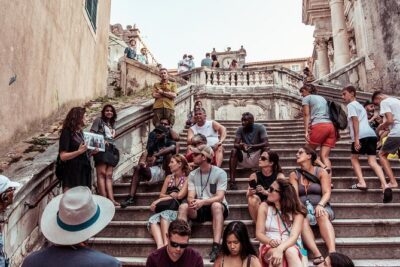
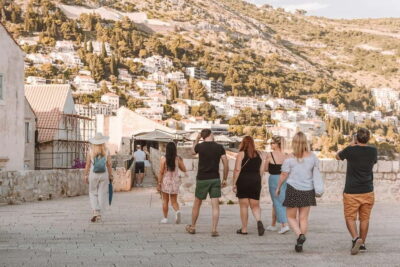
Dubrovnik’s story makes far more sense when someone from the city connects the stone buildings, churches, harbor, and political landmarks. This 90-minute walk does that in a small group capped at eight, with local guides such as Marko, Bruno, and Lucija, also called Lucy, leading the way.
I like the small group size, which gives you room to ask questions instead of trailing behind a flag. I also like the mix of major sights and useful local advice, including places for lunch, dinner, snacks, and drinks. The drawback is time: 90 minutes gives you a sharp introduction, not a full visit to every museum or church.
Key points to know
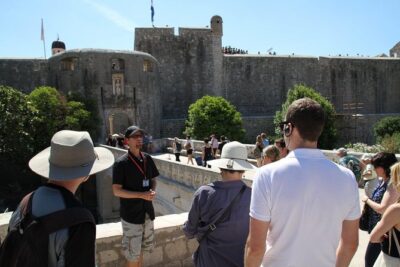
- Meet by the cannon inside Ploče Gate: Look for the guide holding a red and white flag near Revelin Fortress.
- The group never exceeds eight people: That makes questions and conversation easier.
- The walk links Dubrovnik’s architecture to politics and trade: You’ll hear about the old Republic of Ragusa, Venice, and the Ottoman Empire.
- Expect playful touches: You may hunt for statues of Saint Blaise and try your hand at Croatian pronunciation.
- The route covers major Old Town sights: The Cathedral, Rector’s Palace, Sponza Palace, Saint Blaise, Onofrio’s Fountain, and more.
- Local advice is part of the value: The guide points out less familiar streets and suggests places to eat and drink.
Why this 90-minute walk works as a first look
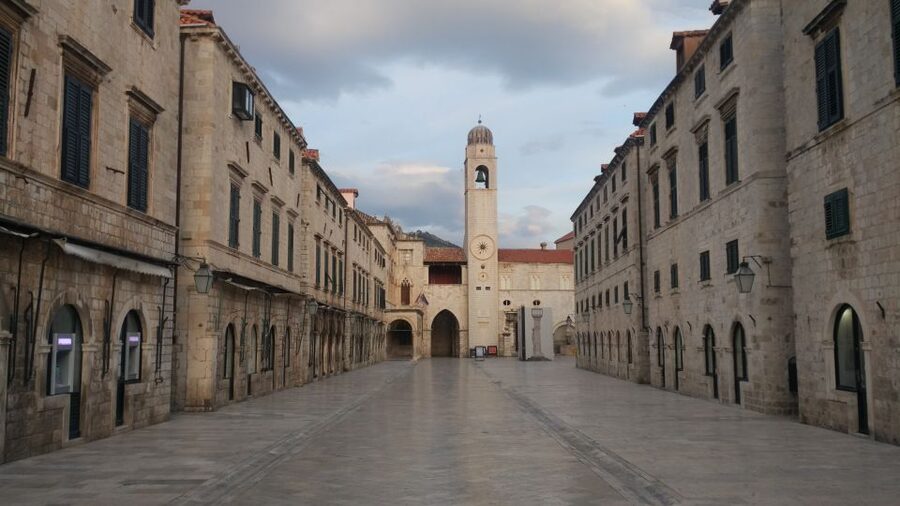
Dubrovnik can feel like a beautiful stone puzzle. A church appears at the end of an alley, a palace opens onto a square, and a fountain hints at an old water system. Without context, you may admire the surfaces without understanding how the city worked.
This walk gives you that framework. You’ll hear how Ragusa, the old Dubrovnik city-state, prospered as a maritime trading republic between East and West. You’ll also see how trade, religion, government, and defense shaped the Old Town’s buildings.
The pace is brisk but manageable. The planned stops are generally short, around five minutes each, with walking between them. That means the guide needs to keep the story moving. Based on the feedback, the strongest guides explain the political and architectural background clearly, answer questions patiently, and add personal memories about modern Dubrovnik.
The experience has earned a 4.9 rating from 16 reviews, with repeated praise for the local guides, friendly tone, historical explanations, and restaurant advice. One less positive assessment found the information a little too much like separate fun facts, without one story tying the city together. That is a useful warning: if you want a long academic lecture, this is not the right format. If you want a lively orientation before exploring on your own, it makes better sense.
More Old Town walking tours in Dubrovnik:
- Dubrovnik: Old Town Walking Tour
★ 4.8 · 5,174 reviews - Dubrovnik Discovery Old Town Walking Tour
★ 5.0 · 4,458 reviews - Dubrovnik: Game of Thrones Walking Tour
★ 5.0 · 1,732 reviews
Finding the meeting point at Ploče Gate
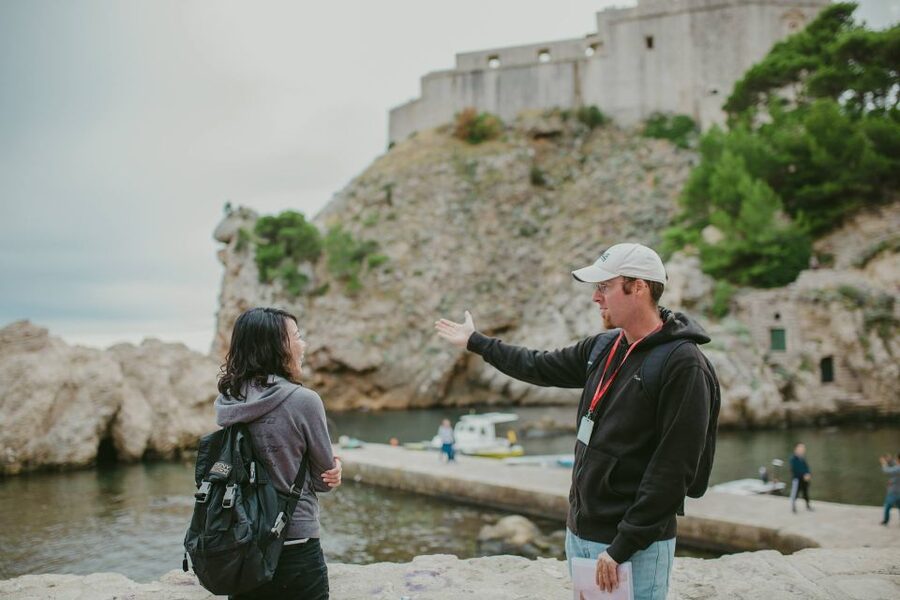
Your meeting point is in the corner of the square just inside Ploče Gate, the eastern entrance to the Old Town. The guide waits near the cannon by Revelin Fortress and holds a red and white flag.
The activity information also identifies a harbour viewpoint as the starting location. In practical terms, expect the walk to connect the gate area with the Old Harbor and the eastern side of the historic center. Give yourself enough time to find the cannon rather than arriving at the last second.
Ploče Gate is a useful place to begin because it immediately puts Dubrovnik’s defenses in front of you. You are not meeting at a modern office or boarding a vehicle. You start beside the walls and fortifications that helped protect the republic.
The route suits a first day in town. You can use the guide’s suggestions afterward, when you still have time to return to a museum, find a meal, or walk a street that caught your attention.
Old Harbor and the trading republic of Ragusa
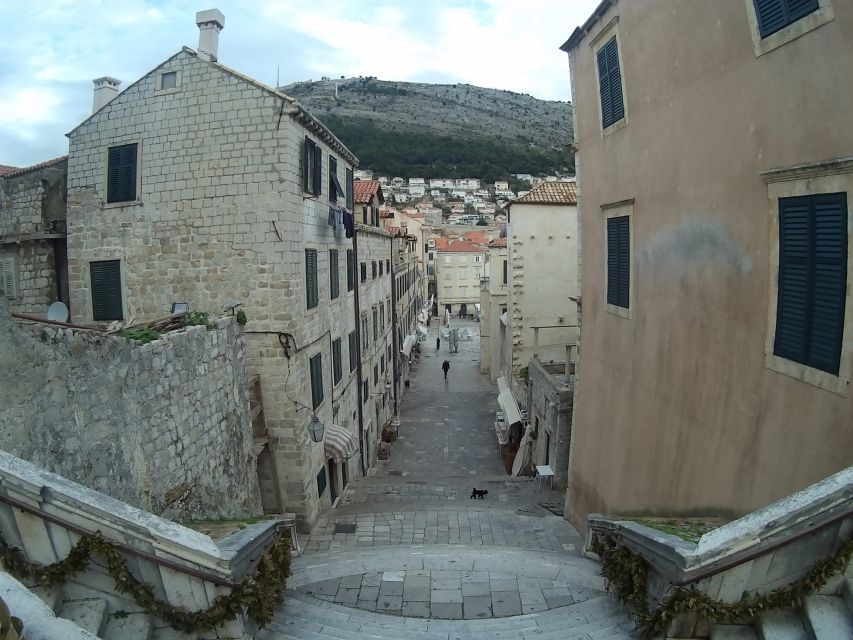
The Old Harbor is one of the most important early stops. It has served as a working center for centuries, and here the guide explains how Dubrovnik made money through shipping and trade.
The useful point is not only that ships once sailed from here. You’ll learn why Dubrovnik mattered beside powerful neighbors such as Venice and the Ottoman Empire. The city-state had to protect its independence while doing business with larger powers. That political balancing act gives meaning to the elegant buildings and defensive walls you see throughout the walk.
I like this part because it turns the harbor from a scenic photo stop into an explanation of Dubrovnik’s success. You can picture old galleys carrying trade goods, but you also learn that the city’s survival depended on diplomacy, commerce, and careful decisions.
The Dominican Monastery and Museum follow naturally in the route. The stop helps show how religious institutions formed part of the city’s public and cultural life. Since the included service is the licensed English-speaking guide, do not assume museum admission or a detailed indoor visit is part of the $32 price. The guide provides the commentary and sightseeing stops.
Dubrovnik Cathedral and the city’s religious center
The Cathedral is one of the route’s key architectural stops. Its Baroque design reflects a later period in Dubrovnik’s history, while its rebuilding after devastating earthquakes points to the city’s repeated need to recover and rebuild.
The guide also introduces Saint Blaise, Dubrovnik’s patron saint. A playful part of the walk asks you to spot Saint Blaise statues around the Old Town. This gives you something to look for after the tour, and it keeps the religious story from becoming a list of dates and names.
You may also be asked to guess how many churches sit inside the Old Town. That sort of question works well for families and for anyone who prefers stories with a little participation. It also shows how strongly religious life shaped the city’s streets.
The route includes the Church of Saint Ignatius, another chance to connect architecture with Dubrovnik’s religious identity. You should expect a guided look and explanation rather than time for a long, quiet interior visit. The five-minute stop format favors orientation over detailed art study.
Same harbour, a completely different sort of day:
- Blue Cave Small-Group Boat Tour from Dubrovnik
★ 5.0 · 9,360 reviews - Full-Day Dubrovnik Elaphite Islands Cruise with Lunch and Drinks
★ 5.0 · 8,823 reviews - Dubrovnik: Epic Game of Thrones Tour + Lokrum & Saver Option
★ 4.9 · 5,995 reviews - Dubrovnik: Elaphiti Islands Full-Day Cruise with Lunch
★ 5.0 · 5,938 reviews
Gundulić Square and the local side of town
Gundulić Square brings you into one of the more social parts of the walk. The square has a market with local produce and souvenirs, so you get a glimpse of everyday trade alongside the grander palaces.
Here you’ll hear about Ivan Gundulić, one of old Dubrovnik’s best-known poets and playwrights. You may also try pronouncing some Croatian words. It is a small detail, but it helps turn a formal history lesson into a shared experience.
I particularly value the route’s move into lesser-known streets around this point. Dubrovnik’s main lanes can be crowded and highly polished for sightseeing. A quieter side street, even for a short stretch, gives you a better sense of the town as a place where people live, shop, eat, and meet.
This is also where the practical advice becomes useful. Your guide can point you toward lunch, dinner, snacks, and drinks. That matters in Dubrovnik, where a restaurant’s location and setting can strongly affect the price. The walk does not include food, but a local recommendation may save you from choosing at random in the busiest lanes.
Rector’s Palace and the machinery of government
Rector’s Palace was the seat of the Republic of Ragusa’s government. The aristocracy met here to make political decisions, so the building lets the guide shift from religion and trade to power.
This stop is especially valuable if you enjoy architecture with a job to do. Rector’s Palace was not simply built to look impressive. It represented the republic’s governing system and the people who managed the city-state.
The guide also adds a lighter observation: the palace area is now a favorite place for Dubrovnik’s cats. You may notice the famously relaxed local cats around the Old Town, often looking as though they own the place. The joke gives the serious political stop an easy, memorable finish.
Again, the guide service is included, but the information does not state that admission to the palace is included. Treat this as a guided exterior or sightseeing stop unless your booking details say otherwise. If you want to tour the interior at length, plan that separately.
Sponza Palace, Saint Blaise, and the final landmarks
Sponza Palace continues the story of Dubrovnik’s public and commercial life. It belongs to the group of buildings that show how trade, administration, and civic identity were given a physical home in the Old Town.
The Church of Saint Blaise brings the patron saint back into the route. By this stage, the statue-spotting game gives the religious landmarks a thread that runs through the entire walk.
The itinerary also includes several short guided sightseeing stops that are not named in the supplied details. That likely allows the guide to adjust the exact emphasis to the group and the flow of the streets. I would see this as a benefit rather than expect a rigid lecture at every corner, though the short format means the depth may vary.
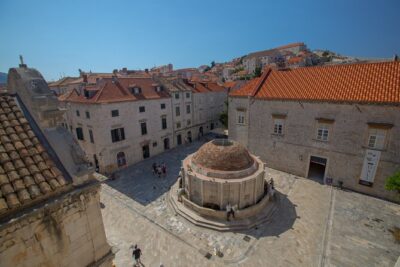
The walk finishes at Large Onofrio’s Fountain. This is a strong closing point because it is both practical and visually memorable. The fountain connects to Dubrovnik’s historic water supply and gives you a final example of how the Old Town’s grand features served daily needs.
By the end, you have moved from the eastern gate and harbor through religious, political, literary, and commercial landmarks to one of the city’s best-known public works.
What the local guide adds
The word local matters here, but it should mean more than being able to name streets. The best part of this experience is the way a local guide can connect old Dubrovnik with the city you see today.
Marko received particular praise for making complex historical and political material easy to follow. Bruno was described as friendly, well informed, and able to discuss recent developments as well as older events. Lucy was noted for patiently answering questions and including the Homeland War and more recent Croatian history.
That modern context is important. Dubrovnik is not only a preserved medieval setting. Its recent past still shapes how local people understand the city. A guide who can move from Ragusa’s maritime politics to modern Dubrovnik gives you a fuller picture than a string of old dates.
The tone also seems relaxed. One person described the experience as like walking with a friend, while another praised the humor and personal anecdotes. You should still expect a structured tour, but it is not presented as a silent march from monument to monument.
Is $32 good value?
At $32 per person, the tour is reasonably priced for a licensed English-speaking guide and a maximum group of eight. The small group is the main value. You are paying for access to questions, conversation, and a more personal pace, not just for someone to recite facts to a crowd.
The price makes the most sense if this is your first time in Dubrovnik. In 90 minutes, you get a map in your head, a basic explanation of Ragusa, an introduction to the city’s major buildings, and restaurant suggestions for later.
The value is lower if you already know the Old Town well or plan to spend the day inside museums. This is an orientation walk, not a museum pass. Entrance fees, food, and drinks are not listed as included, so budget for those separately.
You can cancel up to 24 hours before the activity for a full refund, and you can reserve now and pay later. Those terms are useful when your schedule depends on weather, cruise timing, or changing plans.
Who should book this Dubrovnik walk?
I would recommend it to first-time visitors, couples, families, solo visitors, and anyone arriving with limited time. The eight-person limit is especially helpful if you dislike large groups or want to ask about food and daily life.
It also suits visitors who want history explained in plain English rather than delivered as a long lecture. The game involving Saint Blaise statues and the Croatian pronunciation challenge make it a good fit for families, though the historical content still gives adults plenty to consider.
You may want something else if your priority is a slow architectural study, extended church interiors, or a specialist account of Dubrovnik’s art. The route includes many stops, but most are short. It gives you the pattern of the city, then leaves you to explore the details later.
Should you book it?
Book this tour if you want a friendly, efficient introduction to Dubrovnik led by someone who can discuss both Ragusa’s trading power and modern local life. The strongest reasons are the eight-person limit, the clear route through the Old Town, the practical food advice, and guides such as Marko, Bruno, and Lucy who bring different personal strengths.
Keep your expectations realistic. You will not fully tour every church, palace, or museum in 90 minutes, and the quality of the storytelling may depend on which guide leads your group. For most first-time visitors, though, $32 buys useful context, a good first walk through the city, and a better sense of where to spend the rest of your time.
FAQ
How long is the Dubrovnik walking tour?
The tour lasts 90 minutes.
How large is the group?
The group is limited to a maximum of eight participants.
Where do I meet the guide?
Meet in the corner of the square just inside Ploče Gate, the eastern entrance to the Old Town. The guide waits near the cannon by Revelin Fortress and holds a red and white flag.
What language is the tour conducted in?
The tour is conducted in English by a live English-speaking guide.
Which sights are included in the walk?
The route includes Ploče Gate, the Dominican Monastery and Museum, Old Harbor, Dubrovnik Cathedral, Saint Ignatius Church, Gundulić Square, Rector’s Palace, Sponza Palace, the Church of Saint Blaise, and Large Onofrio’s Fountain.
Is the guide included in the price?
Yes. A professional licensed English-speaking guide is included.
Can I cancel for a refund?
Yes. You can cancel up to 24 hours in advance for a full refund.
Just added around Dubrovnik
- Dubrovnik walking history tour★ 5.0 · 22 reviews
- Kotor, Perast, Sv.Stefan and Budva – Montenegro Private Tour★ 5.0 · 21 reviews
- Dubrovnik Walking Tour★ 5.0 · 4 reviews
- Private Boat Tours Dubrovnik Beach stops and Blue Cave tour★ 5.0 · 7 reviews
- Dubrovnik Private Transfer & Taxi Service★ 5.0 · 41 reviews
- Dubrovnik Sunset Tour with Scenic Views and Local Wine★ 5.0 · 6 reviews
- Full Day Dubrovnik Island Private Boat Tour★ 5.0 · 17 reviews
- Dubrovnik sunset panorama & wine★ 5.0 · 13 reviews
Dubrovnik Old Town Walking Tours, compared.
City Walls Early Morning or Sunset Walking Tour
Read our review →
Dubrovnik Combo: Old Town & Ancient City Walls
Read our review →Browse the lists this tour appears in