
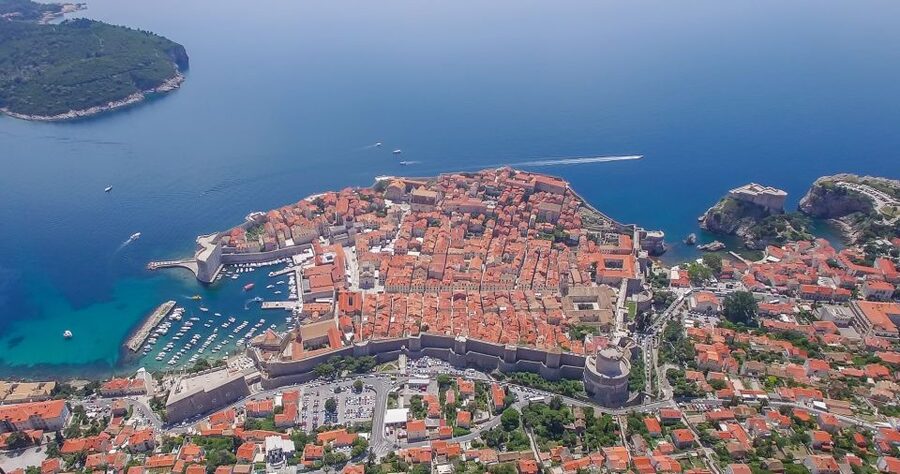
Reviewed · DUBROVNIK OLD TOWN WALKING TOURS
Dubrovnik: Guided Old City Walking Tour
Ancient Ragusa makes more sense when someone points out the stories behind its stones. This walking tour takes you through Dubrovnik’s Old City, from the broad sweep of Stradun to the quieter lanes beyond it, while a licensed local guide explains how the city survived earthquake, war, and political change.
I like the way the tour joins famous sights with recent history, including Dubrovnik’s destruction in 1991. I also like that the route includes the memorial room in Sponza Palace, a stop with more emotional weight than a quick photo at a handsome old building. The main consideration is that this is an English-language walking tour, so you’ll get the most from it if you can follow spoken historical detail comfortably.
Key points at a glance
- See Dubrovnik’s central landmarks: Visit the cathedral, Sponza Palace, Rector’s Palace, Stradun, and the old port.
- Hear the story of Ragusa: Follow Dubrovnik from its establishment through the collapse of Yugoslavia and Croatia’s independence.
- Meet outside Pile Gate: Look for the blue umbrella with the DUtheTour logo at the Amerling Fountain.
- Learn about 1991: The tour explains how Dubrovnik was damaged during the war after earlier destruction from a devastating earthquake.
- Expect a local guide: The experience includes an English-speaking, professional, licensed guide. Sonja and Sophia are among the guides associated with the tour.
- Pay $26 per person: That is a reasonable price for a guided introduction to a city where context adds real value.
Start at Pile Square, outside the old walls

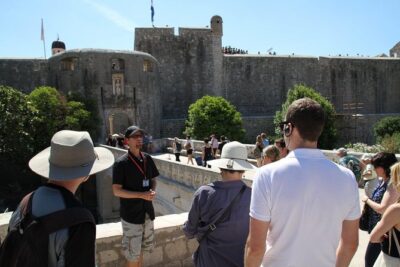
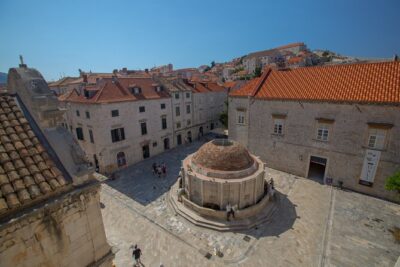
Your meeting point is the Amerling Fountain at Pile Square, next to Restaurant Dubravka and outside Dubrovnik’s Old City. Look for the blue umbrella marked with the DUtheTour logo. This is a useful place to begin because it puts you right beside one of the city’s main approaches without making you search through the narrow streets for a meeting spot.
I recommend arriving with enough time to find the fountain calmly. The instructions are clear, but Pile Square is a busy arrival area, and a recognizable meeting marker matters when several tours may gather nearby.
From here, the guide sets the scene for Dubrovnik as the old city of Ragusa. You are not simply being shown a collection of stone buildings. The point is to understand why this small maritime republic developed its own political character, how it protected its independence, and how its buildings reflect both prosperity and disaster.
The tour ends back at the same meeting point. That makes it easy to continue exploring afterward, return to your accommodation, or arrange another activity without needing to work out transport from a different part of town.
More Old Town walking tours in Dubrovnik:
- Dubrovnik: Old Town Walking Tour
★ 4.8 · 5,174 reviews - Dubrovnik Discovery Old Town Walking Tour
★ 5.0 · 4,458 reviews - Dubrovnik: Game of Thrones Walking Tour
★ 5.0 · 1,732 reviews
Stradun shows Dubrovnik at its grandest
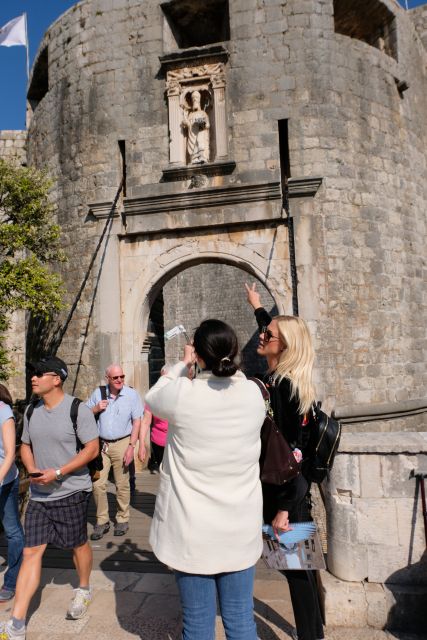
Stradun is the Old City’s main street, and it gives you the clearest sense of Dubrovnik’s formal face. Its open, straight layout contrasts with the narrow side streets that branch away from it. This is the place to admire the polished stone underfoot, the orderly facades, and the way the street gathers daily life into one central corridor.
A guide adds something you would miss by walking Stradun alone. You can see the architecture easily, but the reasons behind the city’s design are less obvious. As the tour explains Dubrovnik’s development, Stradun becomes more than a pleasant route through town. It becomes part of the story of how Ragusa organized itself and rebuilt after disaster.
The city was once left in rubble and ashes after a devastating earthquake, then rebuilt. That detail changes the way you look at the Old City. The neat appearance is not proof that nothing bad ever happened here. It is evidence of a determined rebuilding effort.
Stradun is also the busiest section of the walk. If you prefer quieter corners, pay attention when the guide leads you away from the main street. The side lanes and small squares offer a different view of life inside the walls, with less grand ceremony and more connection to the city’s everyday character.
The cathedral brings faith and rebuilding into view
The cathedral is one of the tour’s key stops. Its value is not only visual. It helps show how religion, public life, and reconstruction fit into Dubrovnik’s story.
The guide can give the building a place within the larger account of the city rather than treating it as an isolated church visit. That context is useful in Dubrovnik, where earthquakes, war, and rebuilding have shaped what you see at nearly every turn.
You should expect the cathedral portion to be guided rather than a long independent visit. The supplied details do not specify how much time is spent inside or whether every area is accessible during the tour, so keep your expectations focused on interpretation and the principal sights.
For me, this is the kind of stop that rewards listening. A photograph can record the facade, but it cannot explain how the cathedral fits into the city’s long effort to recover and preserve its identity.
Sponza Palace gives the walk a serious center
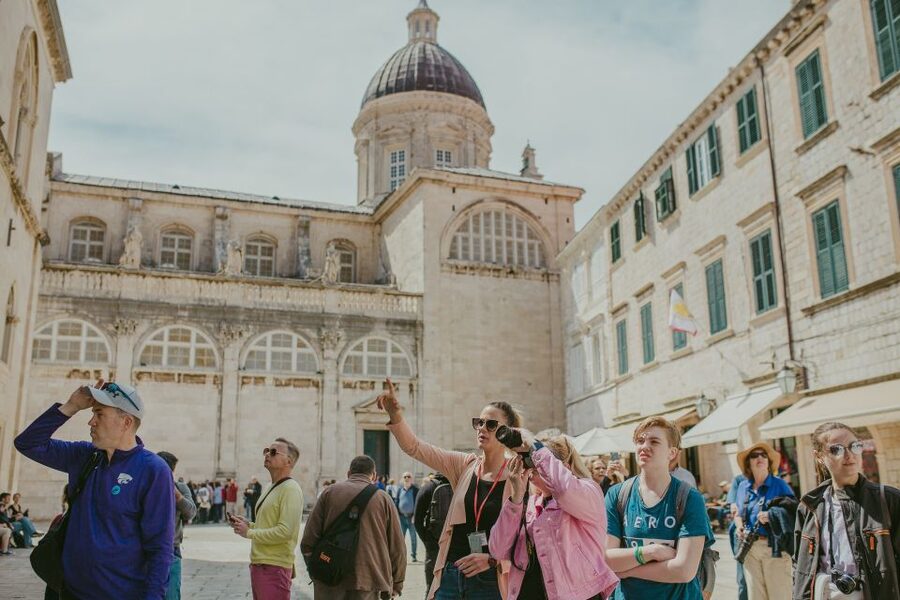
Sponza Palace is one of the most useful stops for understanding Dubrovnik as a functioning city, not just a picturesque one. The tour includes the memorial room, which connects the Old City to the people affected by the 1991 destruction.
That room gives the walk a more recent and personal dimension. It prevents the tour from becoming a parade of medieval names and impressive facades. You are asked to consider that Dubrovnik’s troubles did not end centuries ago. The city was damaged again in 1991, when many people did not expect such an event to happen.
I value this part of the route because it makes the city’s survival easier to understand. The rebuilt stonework is not merely old architecture kept in good condition. Some of what you see has been repaired after modern conflict, and the memorial room helps preserve that memory.
This may also be the most emotionally demanding stop. If you prefer a tour made only of scenic viewpoints and light anecdotes, the memorial section will feel more serious. That is also its strength. It gives the Old City a human scale.
Same harbour, a completely different sort of day:
- Blue Cave Small-Group Boat Tour from Dubrovnik
★ 5.0 · 9,360 reviews - Full-Day Dubrovnik Elaphite Islands Cruise with Lunch and Drinks
★ 5.0 · 8,823 reviews - Dubrovnik: Epic Game of Thrones Tour + Lokrum & Saver Option
★ 4.9 · 5,995 reviews - Dubrovnik: Elaphiti Islands Full-Day Cruise with Lunch
★ 5.0 · 5,938 reviews
Rector’s Palace explains power in Ragusa
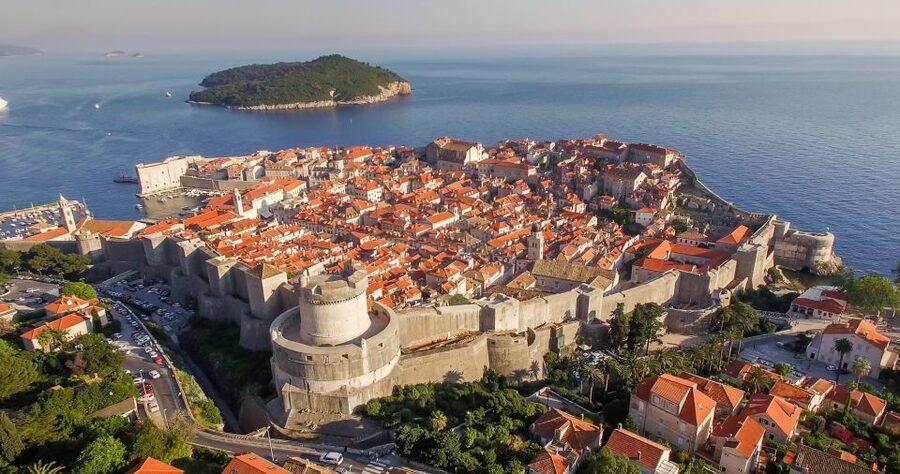
Rector’s Palace introduces you to the political side of Dubrovnik. The name points to the city’s governing system and the authority once centered here. Its elegant setting can make it easy to focus only on the building, but the guide’s job is to connect the palace to the civic life of the old republic.
This stop helps answer a basic question: who made decisions in Ragusa, and how did the city manage itself? The tour presents Dubrovnik as more than a port with attractive walls. It was a place with its own leaders, rules, ambitions, and pressures.
The palace is also a good example of why a walking guide is useful here. Without context, you can admire its proportions and stonework, then move on. With an explanation of its role, the building becomes part of the city’s political story.
The information provided does not specify whether the tour includes a full interior visit or focuses on the palace from outside. Plan on receiving historical interpretation at the site, and confirm the exact interior access if that detail matters to you.
The old port points Dubrovnik toward the sea
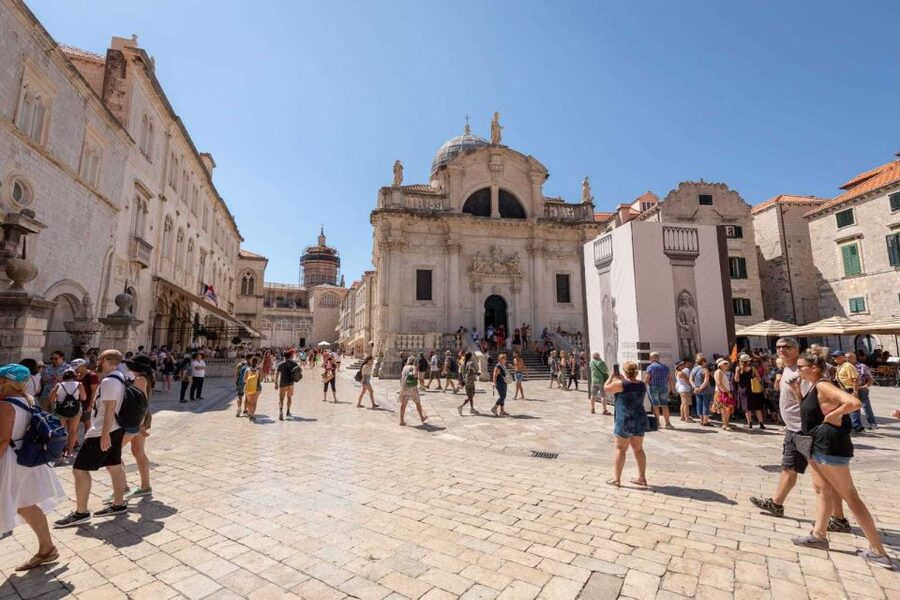
Dubrovnik’s old port is an essential stop because the city’s identity has always been tied to the Adriatic. The port helps you see the Old City not as a sealed medieval enclosure but as a place connected to trade, travel, and the wider region.
This is where the city’s setting becomes especially clear. The walls, streets, and civic buildings make more sense when you remember that Ragusa faced outward toward the sea. A guide can connect the port to the city’s fortunes and explain why control, safety, and access mattered so much.
The port also adds a welcome change of pace after the tighter streets. You get a broader view and a chance to understand how the city relates to its surroundings. The tour’s listed highlights do not include a boat ride or extended time at the waterfront, so think of this as a guided historical stop rather than a harbor excursion.
Quiet lanes reveal the city behind the postcard
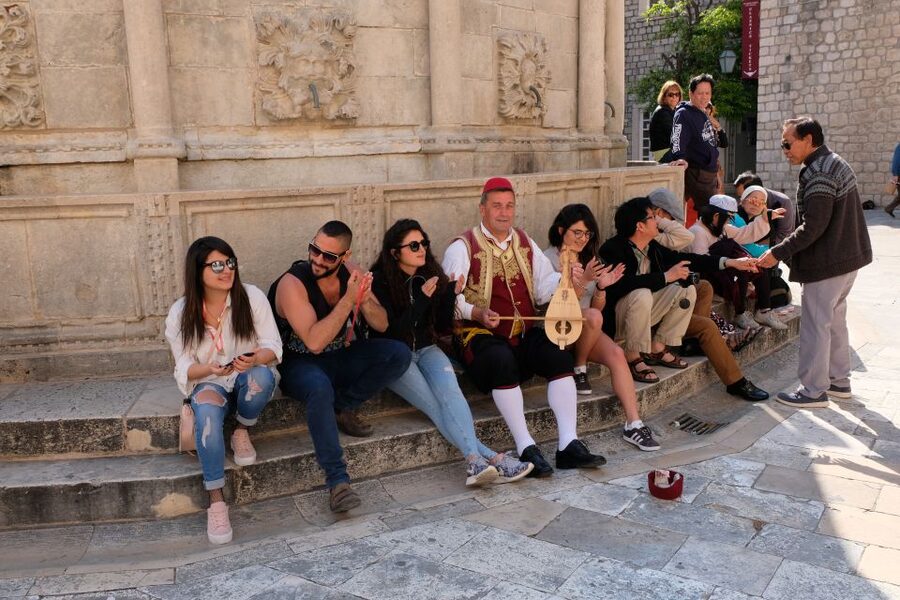
One promise of the walk is to go beyond the usual tourist paths. That does not mean you will avoid the famous sights. Instead, the guide uses the main landmarks as anchors, then helps you notice narrow streets, small squares, and unexpected views that are easy to pass without explanation.
This is one of the strongest reasons to choose a guided walk in Dubrovnik. The Old City is compact, but it is not simple. A short turn can take you from a grand public space into a quieter residential corner, and the difference tells you something about how people live within the walls today.
The tour also aims to show present-day life in the Old City. That balance matters. You hear about the establishment of Dubrovnik, the earthquake, the 1991 damage, the collapse of Yugoslavia, and Croatian independence, but you also see a city that remains lived in rather than preserved as a museum set.
The exact route through the smaller streets is not specified, so the experience may vary somewhat with the guide and conditions on the day. That is normal for a walking tour. The important point is that the route is intended to include more than the standard photo stops.
A guide makes the long timeline easier to follow
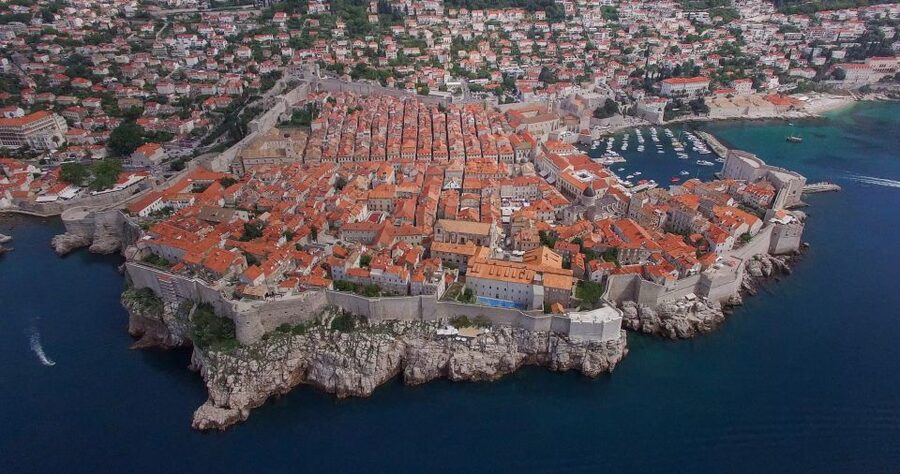
The tour covers a large span of time, from Dubrovnik’s beginnings to the collapse of Yugoslavia and Croatia’s independence. That is a lot to handle on foot, especially when the city presents so many visual distractions.
A good guide gives the timeline shape. You can connect the cathedral and palace to the older city, then connect the memorial room to the modern period. The result is a clearer picture of Dubrovnik as a place that has repeatedly had to adapt.
The guides named in the available feedback include Sonja and Sophia. Sonja is described as entertaining and informative, with a tour that also reached Game of Thrones filming locations. The experience description itself does not list those locations as a formal highlight, so treat that as a possible extra rather than the central reason to book. Sophia is also described as an excellent and informative guide.
The repeated praise for the guides’ friendly and informative approach is important. In a city where you could easily spend an hour reading plaques or following a map, an engaging guide can make the information stick. Still, personalities differ, and the experience will depend partly on who leads your group.
Is $26 a fair price?

At $26 per person, this tour offers solid value if you want a structured introduction to Dubrovnik. The price includes a local, professional, licensed guide and covers the principal Old City sights. You are paying for explanation, not admission to a long list of separate attractions.
That distinction matters. The supplied details do not say that entry fees to additional museums or attractions are included, and the tour is presented as a walking experience. If you want to spend extended time inside each building, a self-guided visit or separate admission may still be necessary.
I would consider the price especially reasonable for a first visit. The Old City’s stones, streets, and buildings are visually impressive, but their meaning is not always obvious. A guided overview can save you from leaving with a stack of disconnected facts.
The value is lower if you already know Dubrovnik’s political and modern history well, or if you prefer to wander without a planned route. In that case, you may want to explore independently and spend your money on a specific museum or longer specialist tour.
Who should book this Dubrovnik walk?

I would recommend it to a first-time visitor who wants the basic structure of the city before exploring alone. It suits anyone who enjoys architecture, local stories, political history, and the connection between old buildings and modern events.
It is also a good choice if you want to understand more than the postcard version of Dubrovnik. The memorial room in Sponza Palace and the discussion of 1991 give the tour a seriousness that a purely scenic walk may lack.
Families and mixed-age groups may appreciate the short, story-based format, though the activity is conducted in English and depends on listening. If young children need constant movement or hands-on activities, a history-focused walking tour may not be the best fit.
Fans of Game of Thrones may enjoy the chance that the guide, particularly Sonja, includes filming locations. Still, the core route is about Dubrovnik itself, not television production.
The tour is less suitable if you need a detailed interior visit at every landmark, a private guide, or a clearly stated long itinerary. The available information does not provide a duration, group size, or exact interior access for each site, so ask before booking if those points are essential.
Practical details before you reserve
The tour is offered in English and starts at the Amerling Fountain outside the Old City, at Pile Square beside Restaurant Dubravka. Look for the blue DUtheTour umbrella. It returns to that same meeting point.
You can reserve and pay later, which helps if your route through Croatia is still changing. Cancellation is allowed up to 24 hours in advance for a full refund.
Because the tour takes place on foot, wear practical shoes and be ready for stone streets and changing surfaces. That advice follows the setting rather than a stated tour rule, but Dubrovnik’s historic center is best approached as a walking environment, not a polished indoor attraction.
Should you book it?
Book this tour if you want Dubrovnik’s famous sights to connect into one clear story. At $26, it is a sensible introduction, especially for a first visit, and the strongest parts are the guide-led explanations, the Sponza memorial room, the old port, and the link between medieval Ragusa and the damage of 1991.
Skip it if you mainly want free time for photographs or a detailed, slow visit inside every building. Otherwise, meet at Pile Square, find the blue umbrella, and let a local guide give the Old City the voice its stones cannot provide.
FAQ
Where does the Dubrovnik walking tour start?
It starts at the Amerling Fountain outside the Old City, at Pile Square next to Restaurant Dubravka. Look for the blue umbrella with the DUtheTour logo.
Where does the tour end?
The activity ends back at the same meeting point at the Amerling Fountain.
What language is the tour offered in?
The tour is offered in English.
What sights are included?
The tour includes the cathedral, the memorial room in Sponza Palace, Stradun, Rector’s Palace, the old port, and parts of Dubrovnik’s Old City beyond the usual main routes.
Who leads the tour?
The experience includes a local, professional, licensed guide. Guides named in the available information include Sonja and Sophia.
How much does the tour cost?
The price is $26 per person.
Can I cancel for a full refund?
Yes. You can cancel up to 24 hours in advance for a full refund.
Just added around Dubrovnik
- Dubrovnik Scavenger Hunt and Highlights Self Guided Audio Tour★ 5.0 · 5 reviews
- Dubrovnik Riviera and Cavtat – Shore Tour★ 5.0 · 4 reviews
- 2-Hour Dubrovnik Private Buggy Panorama Safari★ 5.0 · 39 reviews
- Dubrovnik Romantic Sunset Boat Tour★ 5.0 · 4 reviews
- Dubrovnik City Tour with History, Photos & Round Trip Ride★ 5.0 · 46 reviews
- Dubrovnik Panorama Tour★ 5.0 · 5 reviews
- Dubrovnik Old City Tour and Panoramic Drive★ 4.5 · 11 reviews
- Private Self-Guided Audio Walking Tour in Dubrovnik Old Town★ 3.5 · 26 reviews
Dubrovnik Old Town Walking Tours, compared.


City Walls Early Morning or Sunset Walking Tour
Read our review →
Dubrovnik Combo: Old Town & Ancient City Walls
Read our review →Browse the lists this tour appears in