
Reviewed · WALKING TOURS
A walk through life in communist Yugoslavia
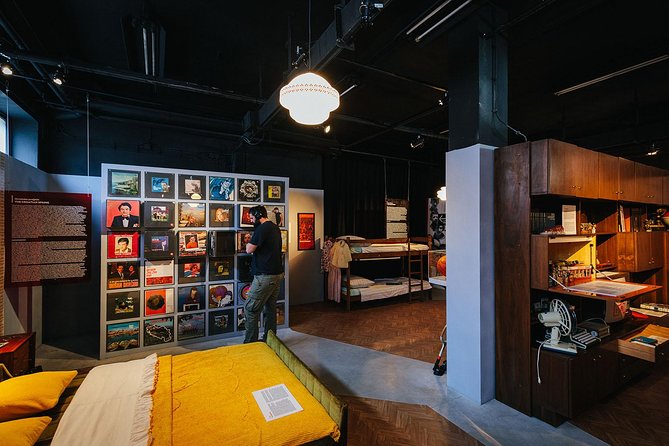
The most useful thing about this experience is its focus on ordinary life under communist Yugoslavia, not just dates and political leaders. In a compact 300-square-meter space, you move through room sets, household objects, music, design, and displays about party control and secret agencies.
I like the museum’s hands-on, time-capsule feel, and I like that it explains a part of Croatian history many first-time visitors know little about. The prepaid mobile ticket also makes arrival simple. The main limitation is its size, and the final years of Yugoslavia’s collapse may receive less attention than some visitors expect.
Key points to know before you go
- A 300-square-meter museum: The Red History Museum is small enough to see in roughly 90 minutes, but packed with objects and displays.
- Everyday life comes first: Room sets and household items show how people lived, listened to music, dressed, and organized daily life.
- Politics is part of the visit: You will learn about the Communist Party, secret agencies, totalitarian control, and Yugoslavia’s Non-Aligned position.
- Prepaid entry saves a step: Your mobile ticket confirms admission for your chosen day and lets you avoid buying a ticket at the counter.
- A good rainy-day or hot-day choice: The visit is indoors and near public transportation at Ul. Svetog Križa 3.
- Allow about 1 to 1.5 hours: The stated visit time ranges from 50 minutes to 1 hour 35 minutes, with about 90 minutes planned for the museum.
Why this small museum matters in Dubrovnik
Dubrovnik is famous for stone walls, sea views, and medieval streets. Those sights are worth your time, but they tell only one part of the city’s story. The Red History Museum turns your attention to the much more recent period when Dubrovnik was part of socialist Yugoslavia.
That shift in focus is the museum’s real value. If you know little about Yugoslavia, you get a practical starting point for understanding modern Croatia. If you already know the broad political story, the household objects and room settings can make that story feel more personal.
The museum presents Yugoslavia as a place where politics reached into daily routines. You are not limited to portraits of leaders or formal political timelines. Instead, you encounter the way a system could shape design, entertainment, public life, work, and private homes.
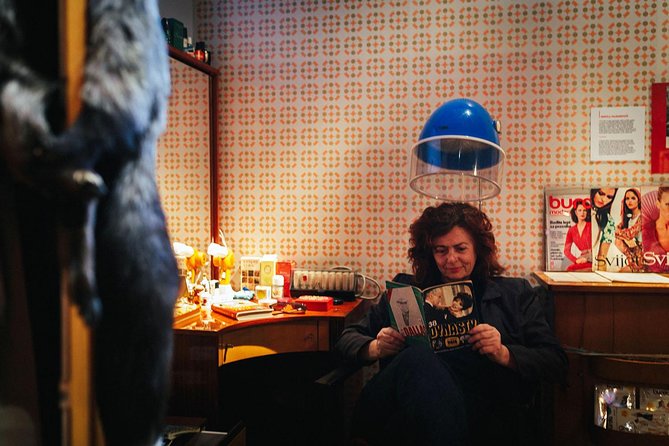
I find that approach more useful than a display made up only of official documents. Political history can feel distant when it is reduced to speeches and dates. A radio, a room arrangement, a popular song, or a common household object can show you what a period felt like in daily use.
More Old Town walking tours in Dubrovnik:
- Dubrovnik: Old Town Walking Tour
★ 4.8 · 5,174 reviews - Dubrovnik Discovery Old Town Walking Tour
★ 5.0 · 4,458 reviews - Dubrovnik: Game of Thrones Walking Tour
★ 5.0 · 1,732 reviews
What you see inside the 300-square-meter space
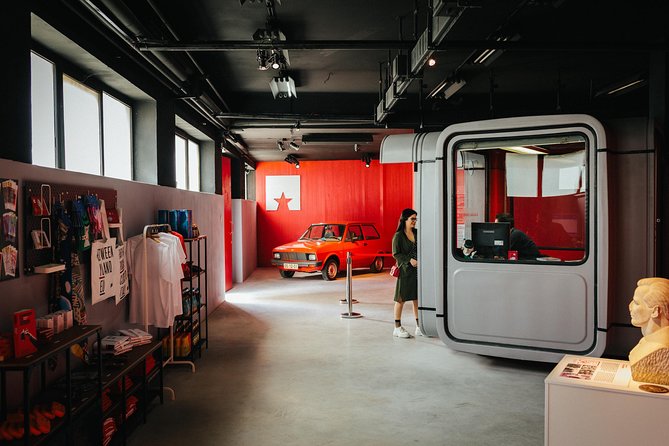
The Red History Museum uses both older objects and newer museum technology. The result is an interactive experience rather than a silent corridor of glass cases.
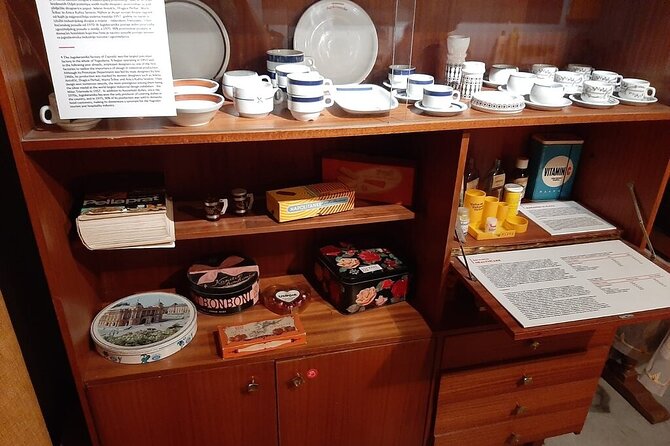
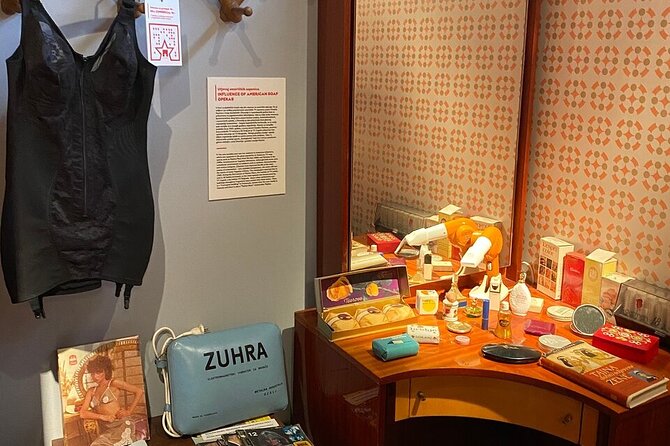
You can expect recreated rooms and displays of genuine 20th-century artifacts. These settings help you connect national events with home life. Instead of asking only what the government did, the museum also asks what people saw, used, heard, and experienced.
The room sets are among the strongest parts of the visit. They give the museum a time-capsule quality without requiring a large building. You may recognize familiar domestic details, while other objects will be completely new to you. Either way, the setting gives context that a single artifact on a shelf cannot provide.
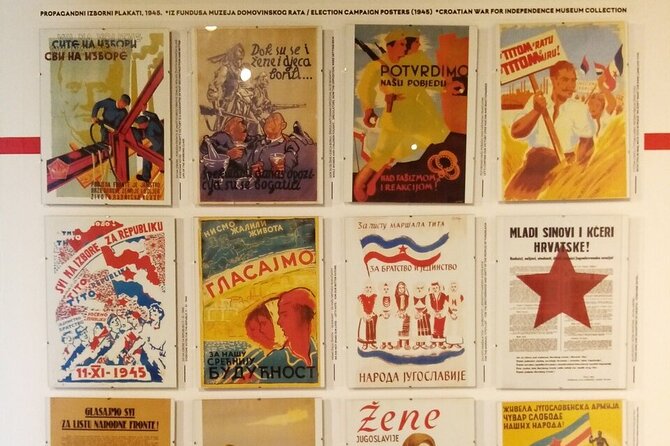
The museum also brings in art and design, which is important. Political systems often reveal themselves through visual style, public symbols, furniture, posters, and products. Looking at those details helps you understand how ideology appeared in normal surroundings.
Music plays a role too. You can listen to some of the period’s greatest hits as you move through the displays. That matters because popular music can explain a society in a different way from political text. It gives you a sense of what people heard in their homes and public spaces, and it keeps the visit from feeling like a standard history lecture.
The political story behind everyday objects
The museum does not present communist Yugoslavia as a simple label. It covers politics, party control, secret agencies, and the country’s position in the Non-Aligned movement.
For visitors unfamiliar with the period, this section is especially useful. The word Yugoslavia can sound familiar while still leaving major questions unanswered. What kind of state was it? How did it differ from other communist countries? What did party control mean for people at home and at work?
The displays help you build those connections. You can move from public ideology to personal experience, then back to the wider international setting. The Non-Aligned aspect adds an important layer because Yugoslavia followed its own path in world politics rather than fitting neatly into a basic East versus West story.
The treatment of secret agencies is another reason to allow enough time. The museum explains the watchful side of the system, including the role of secret police and the pressure that came with a totalitarian society. This gives the visit weight. The objects may look ordinary, but the political system behind them was not.
I would not rush these sections. The museum is compact, so it is tempting to move quickly from one display to the next. Give yourself time to read the information and connect the political material with the household scenes. That is where the visit becomes more than a collection of nostalgic objects.
A visit that works best at about 90 minutes
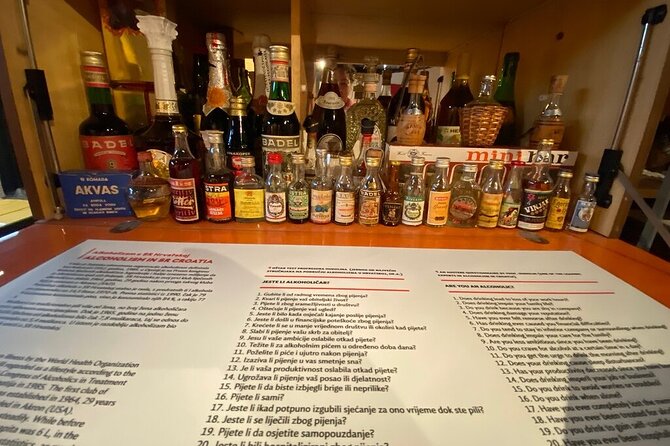
The planned visit lasts about 1 hour 30 minutes, though the advertised range is approximately 50 minutes to 1 hour 35 minutes. That makes this a manageable addition to a Dubrovnik day rather than a full-day commitment.
You can see the museum in under an hour if you move briskly. I would not recommend that unless your schedule is tight. With around 90 minutes, you have time to study the room sets, listen to the music, read the political displays, and pause over objects that catch your attention.
The duration also makes the museum easy to pair with other plans. You could place it between sightseeing stops, use it during bad weather, or visit when you need a break from Dubrovnik’s outdoor heat. Since the experience ends where it begins, you do not need to arrange a separate pickup or return trip.
There is no guide name provided for this experience, and the information describes it as a museum visit rather than a guided walking tour. You should therefore expect to make your own way through the exhibits at your preferred speed.
That format suits me. A self-paced museum lets you spend more time on the topics that interest you, whether that is music, design, daily life, party politics, or secret agencies. On the other hand, visitors who want a live guide to explain every object may find the format less satisfying.
Same harbour, a completely different sort of day:
- Blue Cave Small-Group Boat Tour from Dubrovnik
★ 5.0 · 9,360 reviews - Full-Day Dubrovnik Elaphite Islands Cruise with Lunch and Drinks
★ 5.0 · 8,823 reviews - Dubrovnik: Epic Game of Thrones Tour + Lokrum & Saver Option
★ 4.9 · 5,995 reviews - Dubrovnik: Elaphiti Islands Full-Day Cruise with Lunch
★ 5.0 · 5,938 reviews
What the museum explains especially well
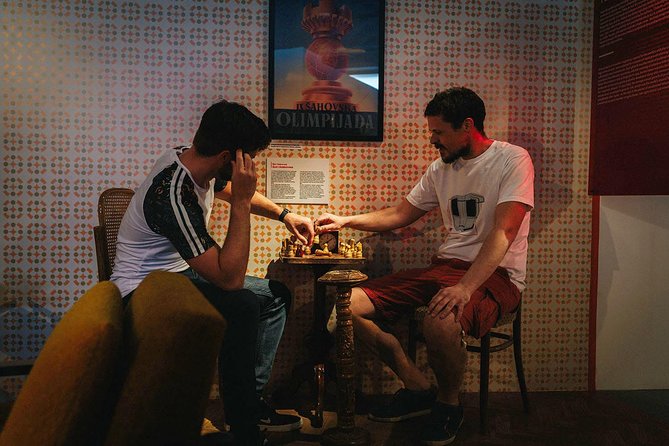
The museum’s greatest strength is the link between private life and public power. You are not simply told that Yugoslavia was communist. You see how a political system could appear in the objects and spaces people encountered each day.
The interactive approach also helps younger visitors and anyone without a strong background in Balkan history. A long political timeline can be hard to follow if you do not already know the names and events. A room, a song, or a familiar household item gives you something concrete to remember.
The visit is also useful for understanding Croatia beyond its tourist image. Modern Croatia was not shaped only by medieval Dubrovnik, Venetian influence, or the 1990s. The Yugoslav period is part of the country’s recent past, and the museum gives that period a clear place in your sightseeing day.
It is worth paying attention to personal stories as well. The museum includes real-life accounts of people who lived under the Communist Party’s watch. Those stories can keep the subject from becoming too abstract or too tidy.
At the same time, you should keep your expectations realistic. This is a small museum, not a vast national archive. It gives you a focused introduction and a set of memorable examples. It cannot cover every political change, every region of Yugoslavia, or every experience of its people in equal detail.
The main limitation: less emphasis on the collapse
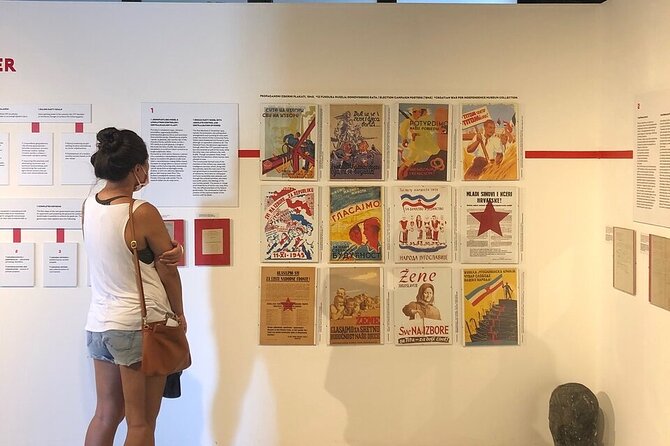
The clearest drawback is the balance of the historical story. The museum covers Yugoslavia from beginning to end, but some visitors may want more detail about the final years, the breakdown of the system, and the events that led to its end.
That is a fair concern. The collapse of Yugoslavia is central to understanding Croatia today, and a visitor may leave wanting a fuller explanation of that transition. The museum’s stronger focus is on life during the communist period, especially its everyday objects, culture, political structure, and atmosphere.
I would treat that limitation as a reason to place the museum within a wider Dubrovnik visit, not as a reason to skip it. If you need a detailed account of the breakup of Yugoslavia, this museum alone may not answer every question. If you want a clear, tangible introduction to the earlier period, it does its job well.
The museum is also more appealing if you enjoy context and objects than if you want a grand architectural experience. It is not another dramatic historic site with panoramic views. Its rewards are quieter: a better grasp of how people lived and how political power affected normal routines.
Is $211 good value for this experience?
The stated price is $211, so value depends heavily on what that amount covers for your booking. The information provided describes prepaid admission with a mobile ticket, not a full private guide, transportation service, or a multi-site excursion.
At that price, I would compare the booking carefully with the museum’s direct admission options before paying. A prepaid ticket has practical value because it confirms your chosen day and saves you from buying at the counter, but the convenience alone may not justify a high price for every visitor.
The experience becomes more worthwhile if you place a high value on a focused, unusual museum and want a fixed reservation in your Dubrovnik schedule. It is also a better fit for people who would otherwise miss the Yugoslav period entirely.
I would not choose it mainly for a quick filler activity if the price feels steep for your budget. The museum is compact, and the visit lasts about 90 minutes. For a family or group, check how the total price applies to everyone before booking.
The strong satisfaction score of 4.9 out of 5 from 187 ratings, with 98 percent recommending it, points to a consistently positive experience. Still, value is personal. The museum’s subject, rather than its size, is what makes the visit worthwhile.
Who should make time for the Red History Museum?
I recommend it most strongly to you if you fit one of these descriptions:
- You know little about Yugoslavia and want a clear introduction.
- You want to understand Croatia’s recent past, not just its medieval sights.
- You enjoy museums built around real objects and room settings.
- You prefer self-paced visits to fixed guided tours.
- You want an indoor activity that takes about an hour to an hour and a half.
- You are interested in politics, design, music, or daily life under state control.
Families may also find the interactive displays easier to approach than a text-heavy history museum, though the political subject may suit older children and adults better. Most people can participate, and service animals are allowed.
You should think twice if you want a large museum with extensive coverage of the Yugoslav breakup, or if you dislike self-guided exhibits. The museum is concentrated and purposeful. That is a benefit for some visitors and a limit for others.
The location at Ul. Svetog Križa 3 is near public transportation, which makes it practical to reach without adding a complicated transfer. Your mobile ticket is useful for a planned visit, especially when you want to keep your day moving.
Should you book this Dubrovnik museum?
Book it if you want to understand the Dubrovnik and Croatia you cannot see from the city walls. The Red History Museum gives you household objects, music, room sets, political material, and personal stories in one focused visit.
I would allow 90 minutes, arrive with curiosity, and read more slowly than you might at first plan. The museum is small, but its subject is not. Just remember that its treatment of Yugoslavia’s final breakdown may feel brief, and check the $211 price carefully against your budget and booking details.
For visitors who value authentic local context, this is one of the more useful indoor stops in Dubrovnik. For everyone else, it is still a good choice when you want a break from the usual coastal sightseeing and a clearer sense of the recent past that shaped Croatia.
FAQ
Where does the Red History Museum experience start and end?
It starts at the Red History Museum, Ul. Svetog Križa 3, 20000 Dubrovnik, Croatia. The activity ends back at the same meeting point.
How long does the museum visit take?
The approximate duration is listed as 50 minutes to 1 hour 35 minutes. The planned museum visit is about 1 hour 30 minutes.
Is admission included?
Yes. The experience includes admission to the Red History Museum, with a mobile ticket used for entry.
What does the museum cover?
It covers everyday life in communist Yugoslavia, including art, design, politics, secret agencies, the Communist Party, music, personal stories, and Yugoslavia’s Non-Aligned position.
Can I cancel for a full refund?
Yes, if you cancel at least 24 hours before the experience start time. Cancellations made within 24 hours are not refundable, and changes within that period are not accepted.
Is the museum accessible by public transportation?
Yes. The museum is near public transportation. Service animals are allowed, and most people can participate.
Just added around Dubrovnik
- Dubrovnik walking history tour★ 5.0 · 22 reviews
- Kotor, Perast, Sv.Stefan and Budva – Montenegro Private Tour★ 5.0 · 21 reviews
- Dubrovnik Walking Tour★ 5.0 · 4 reviews
- Private Boat Tours Dubrovnik Beach stops and Blue Cave tour★ 5.0 · 7 reviews
- Dubrovnik Private Transfer & Taxi Service★ 5.0 · 41 reviews
- Dubrovnik Sunset Tour with Scenic Views and Local Wine★ 5.0 · 6 reviews
- Full Day Dubrovnik Island Private Boat Tour★ 5.0 · 17 reviews
- Dubrovnik sunset panorama & wine★ 5.0 · 13 reviews
Walking Tours, compared.


City Walls Early Morning or Sunset Walking Tour
Read our review →
Browse the lists this tour appears in