
Reviewed · DUBROVNIK HISTORY TOURS
Dubrovnik Old Town History Walking Tour
Dubrovnik’s Old Town is easy to admire and surprisingly hard to understand. This 90-minute walk gives you the basic map and the big story, from the small maritime republic of Ragusa to the shelling and rebuilding of the 1990s. You move from fountain to monastery, market to harbor, then finish near the bell tower and Orlando Column.
I like the way the tour mixes famous sights with useful local detail, including the old pharmacy, green market, quarantine system, and the city’s other religious communities. I also like the personal touch from local guides such as Ivana, Jelena, Sara, Joseph, and Ermina, who add family stories and practical suggestions for the rest of your stay.
The main drawback is the pace. You cover a lot in a short time, and a group of up to 30 people can make it harder to hear or ask questions. The route is a good orientation, but it is not a close look inside every major building.
Key points to know before you book
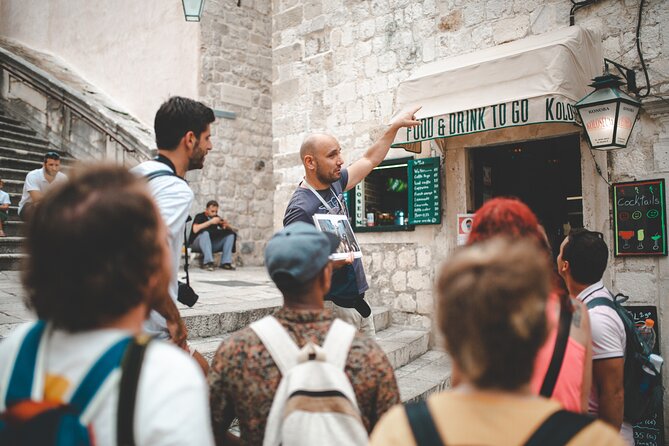
- A fast Old Town orientation: See the main streets and landmarks in about an hour and a half.
- Local stories beyond the monuments: Guides connect Dubrovnik’s buildings with daily life, religion, trade, war, and family traditions.
- A strong first-day activity: You finish back at the starting point with a clearer sense of where to go next.
- Important sights without entrance fees: The tour explains places such as the Franciscan Monastery, Rector’s Palace, Cathedral, and Old Port from outside.
- Good value at $24.19: You are paying for a local guide and a useful historical framework rather than admission to museums.
- Plan for a group setting: The maximum group size is 30, and the tour is offered in English.
Starting beneath the red umbrella at Onofrio’s Fountain

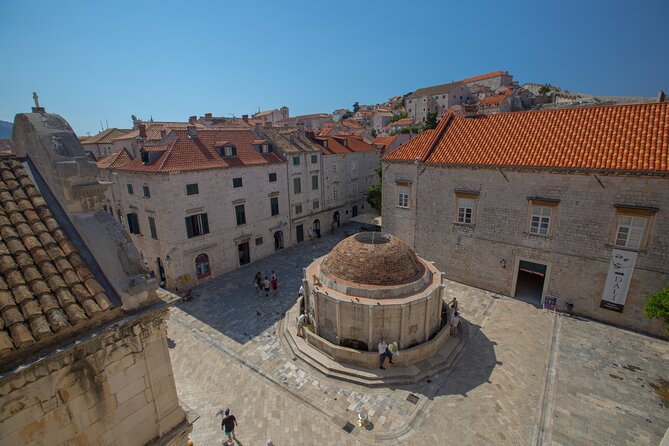
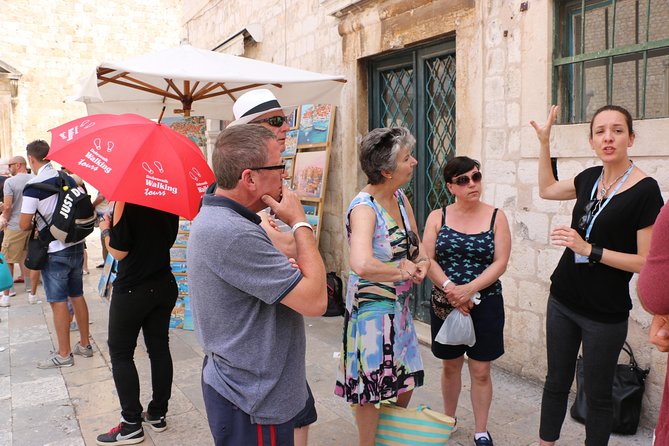
Your meeting point is the Large Onofrio’s Fountain, next to the Hard Rock Cafe. Look for the red umbrella used by Dubrovnik Walking Tours. The guide introduces the group, then leads everyone into the Old Town.
This is a sensible place to begin. The fountain is not simply a decorative landmark. It is part of Dubrovnik’s old aqueduct system, an impressive piece of engineering for a city that had to manage water carefully inside its walls.
The opening talk sets up the story of Ragusa, the former name of Dubrovnik’s republic. You get the basic idea quickly: this was a small but capable maritime trading state that used diplomacy, commerce, walls, and careful administration to protect its independence.
I appreciate this opening because it gives the rest of the walk a purpose. Instead of seeing a line of attractive stone buildings, you begin to understand how water, trade, religion, defense, and government shaped the city.
More history tours in Dubrovnik:
- Game of Thrones & History of Dubrovnik Tour
★ 5.0 · 628 reviews - Dubrovnik: Old Town History Walking Tour
★ 4.9 · 474 reviews - Early Bird Dubrovnik History Tour – 7:30 Start
★ 5.0 · 198 reviews
The Holy Savior Church and Dubrovnik’s religious life
From the fountain, the walk follows the main street and passes the small votive Church of Holy Savior. This is a short stop, but it helps explain how strongly religion shaped public life in the old republic.
The church also gives you an early look at the scale of the Old Town. Dubrovnik’s famous streets are polished and grand, but many important buildings are small, tucked into the city’s dense fabric. You are often only a few steps from a busy main street and a quiet place of worship.
Your guide also points out local customs and traditions that have lasted for centuries. The value here is not just a list of dates. You begin to see the Old Town as a place where daily routines and old beliefs still affect how the city feels.
Franciscan Monastery, pharmacy, and library
The Franciscan Church and Monastery is one of the tour’s most rewarding stops. The complex includes a church, monastery, library, and pharmacy. Its earlier monastery was built outside the walls in the 13th century before the order became part of the walled city’s story.
The pharmacy is the detail most people remember. Founded in 1317, it is described as the third-oldest functioning pharmacy in the world. The library contains more than 20,000 books, including about 1,200 valuable old manuscripts.
You should keep your expectations clear: this walking tour discusses the complex, but it does not include a separate admission visit through every interior space. Still, the explanation makes the building much more meaningful if you return later on your own.
This is also where the local angle matters. Guides connect the monastery to traditions and customs that continue in Dubrovnik. Personal stories from guides such as Sara and Ermina add a sense of lived experience rather than presenting the city as a museum set.
Stradun explains the shape of the Old Town
The walk then reaches Stradun, officially called Placa. This broad stone street is Dubrovnik’s main promenade, business street, and gathering place. It divides the Old Town into northern and southern halves.
Stradun is the city’s natural orientation line. Once you know it, you can begin to place the narrower streets, squares, churches, and harbor. The guide explains how the city’s layout developed, so you are not simply following a route. You are learning how to read Dubrovnik.
The historical story moves beyond medieval Ragusa. You hear about the fall of the republic in 1808, later Yugoslav history, and the Homeland War of the 1990s. That last subject matters. Dubrovnik’s old stones look timeless, but the city suffered during the conflict and later rebuilt.
I value this part because it gives the city a modern voice. A tour that only discusses nobles, churches, and sea captains would leave out an important part of Dubrovnik’s identity.
More Old Town walking tours in Dubrovnik:
- Dubrovnik: Old Town Walking Tour
★ 4.8 · 5,174 reviews - Dubrovnik Discovery Old Town Walking Tour
★ 5.0 · 4,458 reviews - Dubrovnik: Game of Thrones Walking Tour
★ 5.0 · 1,732 reviews - Dubrovnik: City Walls Early Morning or Sunset Walking Tour
★ 4.8 · 1,523 reviews
Orthodox, Jewish, and Muslim influences
Leaving the wide main street, you enter narrower inner lanes toward the port. The route stops near the Church of the Holy Annunciation, an Orthodox Christian church.
This is a useful correction to the idea that Dubrovnik had only one religious identity. The guide discusses the influence of Orthodox Christian, Jewish, and Muslim communities on the city’s past. Their presence reflects Dubrovnik’s position as a trading port with links across the Adriatic and the wider Mediterranean.
The stop is brief, but it broadens the story. You see that the republic’s strength came partly from dealing with different communities and cultures. For a short introductory tour, this is a welcome amount of context.
Gundulic Square and the green market
At Gundulic Square, you reach the monument to poet Ivan Gundulic and the green market. This is one of the more human stops on the route.
The market gives the guide a chance to talk about local produce, food customs, and everyday traditions. It also breaks up the parade of grand monuments. You get a glimpse of how the Old Town functions as a neighborhood and marketplace, not just a sightseeing zone.
The square is also a useful place to pause and get your bearings. If you plan to return for a meal, coffee, or a closer look at local products, you will already know where it is.
Rector’s Palace and the machinery of government

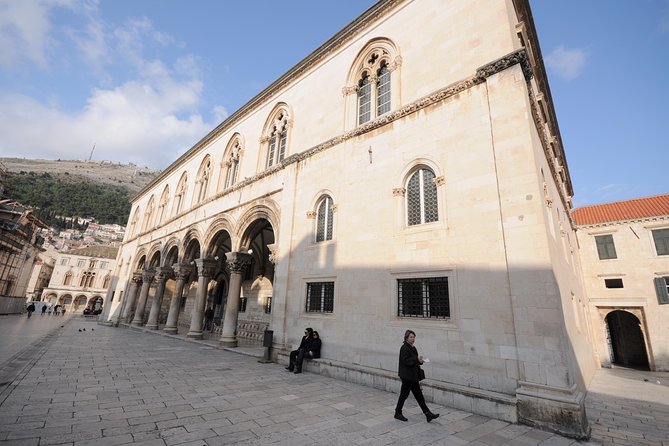
Nearby, the route reaches Rector’s Palace, one of the city’s most important buildings. It served as the seat of the Rector of the Republic of Ragusa from the 14th century until 1808.
The palace was more than a residence. It housed the Minor Council and the state administration, along with an armoury, powder magazine, watch house, and prison. Those details show how much government work was packed into one building.
The idea of the rector is especially interesting. The office was powerful, but the republic placed limits on individual rule. Your guide uses the palace to explain how Ragusa managed its affairs and how public authority operated within the city.
Again, the walking tour gives you the outside story. If the palace interests you, you may want to schedule a separate interior visit. This tour helps you decide which places deserve more of your time.
Cathedral legends and the story of Richard the Lionheart
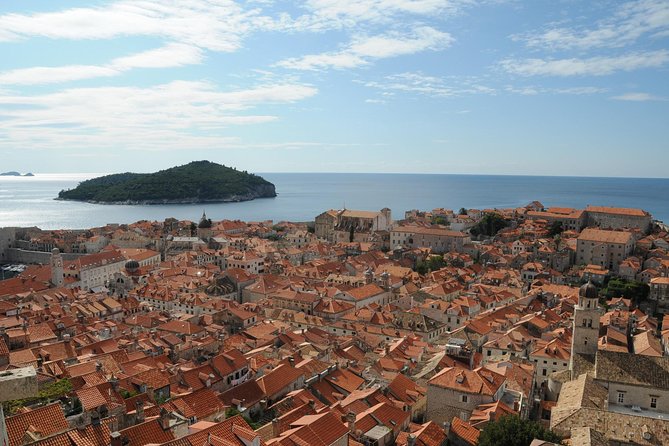
The Cathedral of the Assumption of the Virgin Mary brings the tour to one of Dubrovnik’s best-known legends. According to the story, Richard the Lionheart was returning from the Crusades in 1192 when a storm wrecked his ship and sent him ashore on nearby Lokrum Island.
The tale links Dubrovnik to a wider medieval world of crusaders, rulers, storms, and sea routes. Your guide presents it as a legend, which is the right approach. It adds color without pretending that every old story is proven fact.
The cathedral also helps tie together several themes from the walk: faith, politics, art, trade, and the importance of the sea. You have already seen how religion shaped the city, and here the religious and civic stories meet again.
The Old Port and Dubrovnik’s seafaring power
The route continues to the City Harbor, also called the Old Port. This is where Dubrovnik’s identity as a maritime republic comes into focus.
Ships from Dubrovnik sailed across the Mediterranean, and galleons from the republic served in navies around Europe and beyond. Shipbuilding and loading took place in the Arsenal, a key part of the port’s working life.
The guide also explains the old quarantine system. Dubrovnik was a trading center, but trade brought disease as well as wealth. The quarantine arrangements show how seriously the city treated public health and how organized its authorities could be.
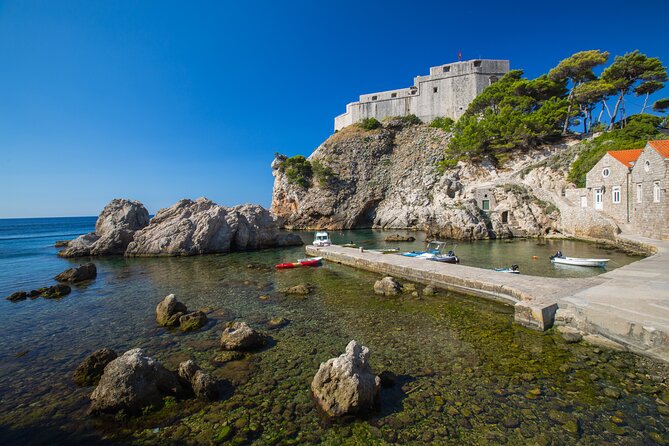
You also hear about nearby Fort St. Luke and Fort St. John. These defenses protected the harbor and helped control access to the city. The port is a strong stop because it combines commerce, military planning, public health, and geography in one place.
The scheduled time here is about 15 minutes, one of the longer stops. That makes sense. The harbor is not only scenic. It explains why Dubrovnik existed and how it survived.
Orlando Column, Sponza Palace, and the bell tower
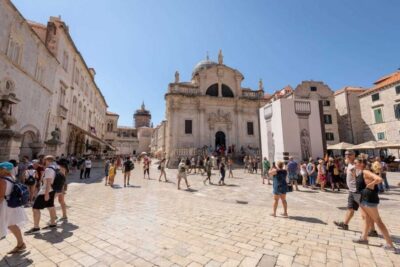
The walk leaves the port and returns toward the eastern end of Stradun. At Luza Square, beneath the City Bell Tower, the tour gathers several final sights.
You see the Church of St. Blaise, dedicated to Dubrovnik’s patron saint, and hear the legend of the knight Orlando. His column is one of the city’s best-known symbols and has long carried civic meaning.
The guide also points out Sponza Palace, the Small Onofrio’s Fountain, and the tall bell tower. These final monuments bring the tour back to the central themes of Dubrovnik: faith, water, commerce, civic pride, and public ceremony.
Ending here works well. You finish close to the main street and the starting point, so you can continue exploring without needing transport. You can also return to any sight that caught your interest, find a restaurant, or walk the Old Town with a better sense of direction.
How much value do you get for $24.19?
At $24.19 per person, this is a reasonable price for a guided introduction to Dubrovnik. You are not paying for museum admissions, hotel transport, or an extended specialist lecture. You are paying for 90 minutes of local explanation that helps you use the rest of your time well.
That matters in Dubrovnik, where the most attractive streets can also be confusing, crowded, and full of details that are easy to miss. A guide helps separate the key stories from the visual overload.
The value is strongest if you take the tour near the start of your stay. Guides such as Ivana have offered suggestions for places to visit afterward, and other guides, including Jelena, Joseph, Sara, and Pero, have been praised for humor, personal stories, and clear explanations.
A small group would give you the best chance to ask questions. The maximum is 30 people, so you should expect a standard group walk rather than a private experience. In one case, a booking with only two people resulted in a private tour, but that should be treated as a lucky possibility, not a promise.
Pace, comfort, and practical details
Most people can take part, and service animals are allowed. The route begins and ends at Large Onofrio’s Fountain, with no hotel pickup or drop-off. Public transportation is nearby.
One useful point from the tour details is that the introduction itself is largely step free. Still, Dubrovnik’s Old Town has many stairs, narrow lanes, and uneven stone surfaces in other areas, so anyone with limited mobility should consider the route carefully.
The tour is offered in English and includes a mobile ticket. Confirmation arrives at booking, and departure times can be chosen to fit your plans. Since the tour requires good weather, poor conditions may lead to a different date or a full refund.
Free cancellation is available up to 24 hours before the start time. Inside that window, the cost is not refunded and changes are not accepted.
The tour is booked, on average, about 37 days ahead. That suggests you should reserve early if your schedule is fixed, especially during busy periods.
Who should take this Dubrovnik walking tour?
I would choose this tour if you are visiting Dubrovnik for the first time and want a clear introduction before exploring alone. It suits couples, families, and solo visitors who prefer a short walk with a defined route.
It is also a good fit if history can feel dry when presented as a list of rulers and dates. The strongest guides bring in local family stories, daily life, humor, and memories of the 1990s war. That human detail helps the city make sense.
You may want something else if you already know Dubrovnik well, want long interior visits, or prefer a private guide with plenty of time for questions. The tour covers many sights, but it cannot explore each one in depth in only 90 minutes.
Should you book it?
I would book this tour for the first morning or afternoon of a Dubrovnik stay. The route covers the city’s essential landmarks, explains why the Old Town has its unusual shape, and leaves you with a practical plan for further exploring.
The best reason to choose it is the combination of solid historical context and local storytelling. The main caution is the group size and quick pace. If you accept that this is an orientation walk rather than a full museum tour, $24.19 is fair value and the experience should help you enjoy every independent walk that follows.
FAQ
Where does the Dubrovnik Old Town History Walking Tour begin?
It begins at the Large Onofrio’s Fountain on Poljana Paska Miličevića, next to the Hard Rock Cafe. Look for the red umbrella used by Dubrovnik Walking Tours.
Where does the tour end?
The tour ends back at the meeting point near Large Onofrio’s Fountain.
How long does the tour last?
The walking tour lasts approximately 1 hour and 30 minutes.
What language is the tour offered in?
The tour is offered in English.
How much does the tour cost?
The listed price is $24.19 per person.
What sights are covered?
The route includes Large Onofrio’s Fountain, the Church of Holy Savior, Franciscan Church and Monastery, Stradun, the Church of the Holy Annunciation, Gundulic Square, Rector’s Palace, the Cathedral of the Assumption, City Harbor, Orlando Column, Sponza Palace, the Small Onofrio’s Fountain, and the bell tower.
Is hotel pickup included?
No. Hotel pickup and drop-off are not included.
How large can the group be?
The maximum group size is 30 people.
Can I cancel for a full refund?
Yes. You can cancel at least 24 hours before the start time for a full refund. Cancellations or changes made within 24 hours are not refunded. If poor weather causes the tour to be canceled, you will be offered another date or a full refund.
Just added around Dubrovnik
- Dubrovnik Scavenger Hunt and Highlights Self Guided Audio Tour★ 5.0 · 5 reviews
- Dubrovnik Riviera and Cavtat – Shore Tour★ 5.0 · 4 reviews
- 2-Hour Dubrovnik Private Buggy Panorama Safari★ 5.0 · 39 reviews
- Dubrovnik Romantic Sunset Boat Tour★ 5.0 · 4 reviews
- Dubrovnik City Tour with History, Photos & Round Trip Ride★ 5.0 · 46 reviews
- Dubrovnik Panorama Tour★ 5.0 · 5 reviews
- Dubrovnik Old City Tour and Panoramic Drive★ 4.5 · 11 reviews
- Private Self-Guided Audio Walking Tour in Dubrovnik Old Town★ 3.5 · 26 reviews
Dubrovnik History Tours, compared.

Dubrovnik History, Sweets & Liquors in a Private Palace (PRIVATE)
Read our review →
Dubrovnik Old Town: Night tour with History, Wine & Bites
Read our review →Browse the lists this tour appears in