
Reviewed · DUBROVNIK HISTORY TOURS
Dubrovnik walking history tour
Dubrovnik’s story comes alive around its stone streets, fountains, palaces, and churches, and this 90-minute walking tour gives you a useful first look without taking up half your day. You begin at Pile Gate, then move into the Old Town with a licensed English-speaking guide who explains how the old republic worked, survived, and supplied itself with water.
I like the focus on Onofrio’s Fountain and its aqueduct, a practical piece of medieval engineering that is easy to overlook when you are busy admiring Dubrovnik’s polished limestone. I also like the personal approach praised in the feedback, especially from guides Ines and Ynez, who are described as friendly, clear, and good at mixing local stories with broader Croatian history. The main drawback is that City Walls tickets are not included, so your total cost rises if you want the famous circuit afterward.
Key points to know before booking
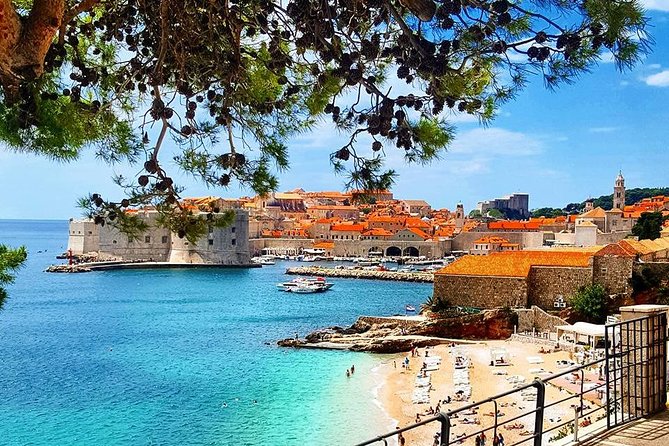
- See Dubrovnik’s main Old Town landmarks in about 90 minutes, including Sponza Palace, Rector’s Palace, Orlando’s Column, and the Cathedral.
- Understand the 12-kilometre aqueduct that brought water to Dubrovnik and ended at Onofrio’s Fountain.
- Expect an English tour with a licensed guide, with Ines or Ynez praised for clear explanations and an easy manner.
- City Walls entry is separate, listed at 35 euros per person.
- The group can reach 30 people, so ask yourself if you prefer a compact introduction or a more intimate walk.
- Free cancellation is available up to 24 hours before the start time, which gives you some flexibility in a busy Dubrovnik schedule.
A useful first walk through Dubrovnik’s Old Town
This is the kind of tour that works best near the beginning of your stay. Dubrovnik’s Old Town is compact, but its history is not simple. Republic-era politics, Venetian influence, church power, earthquake damage, water engineering, and the city’s long fight for independence are all packed into a small area.
A guide helps you connect the pieces. Instead of seeing a palace as just another handsome stone building, you learn what it meant in the life of the former Republic of Dubrovnik. Instead of passing a fountain on the way to a restaurant, you see it as part of the system that allowed the city to grow.
The tour lasts about an hour and a half, so you should expect a brisk overview rather than a detailed visit inside every monument. That short format is useful if you have a cruise-day schedule, limited time, or other plans for the afternoon. It also means you may want a separate visit to the City Walls or museums after the walk.
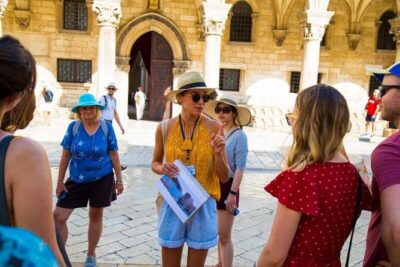
The group limit is 30 people. That is not a tiny private walk, but it is still manageable for a licensed guide moving through the Old Town. On a crowded day, staying close to the guide will matter, especially around the main street and busy entrances.
More history tours in Dubrovnik:
- Dubrovnik Old Town History Walking Tour
★ 5.0 · 1,684 reviews - Game of Thrones & History of Dubrovnik Tour
★ 5.0 · 628 reviews - Dubrovnik: Old Town History Walking Tour
★ 4.9 · 474 reviews
Starting at Pile Gate
The walk begins at Pile Gate, with the listed meeting address at Art Go’Den, Brsalje ul. 1, Dubrovnik. Your booking confirmation should be checked carefully for the exact meeting instructions, since the tour information refers both to Pile Gate and to the street address.
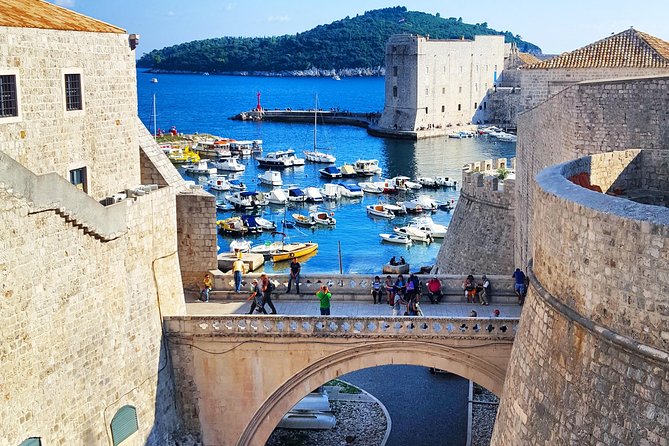
Pile Gate is a sensible place to begin. It is one of the main entrances into the Old Town, so you get an immediate sense of Dubrovnik’s defensive design. The transition from the open area outside the walls into the historic core sets up the central theme of the tour: this was not simply a pretty coastal town, but a carefully protected republic with its own government and systems.
From here, you walk through the Old Town and stop at major monuments. The route is on foot, and the old streets are paved in stone. Wear shoes with a firm sole, and bring water, particularly in hot weather. The tour description allows you to refresh at Onofrio’s Fountain, but you should still arrive prepared for sun and warm stone.
Sponza Palace and the working republic
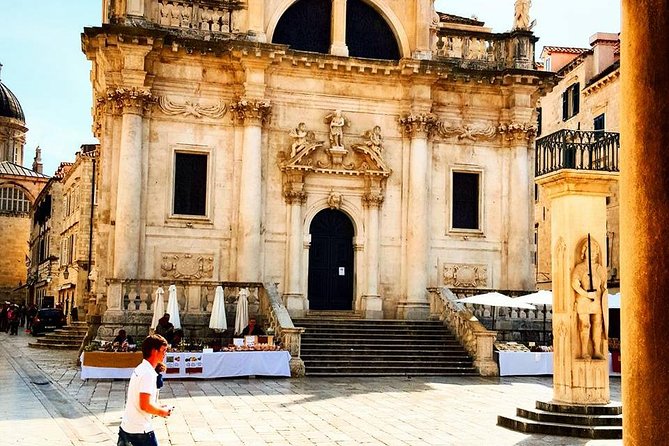
Sponza Palace is listed as the itinerary stop, and it is one of the most useful places for understanding Dubrovnik’s civic life. Its elegant façade can make it seem purely decorative, but the building had practical roles tied to commerce and administration.
Your guide can give the palace a place in the wider story of the republic. Dubrovnik’s independence depended not only on walls and diplomacy, but also on trade, records, contracts, and orderly public life. Sponza Palace helps turn those broad ideas into something you can see in front of you.
This is also a good example of why a guide adds value here. You can photograph a façade on your own, but you may not know which details matter or how the building connects to the city’s political and commercial systems. The tour keeps the explanation moving, so you get context without committing to a long museum visit.
Rector’s Palace and the power of office
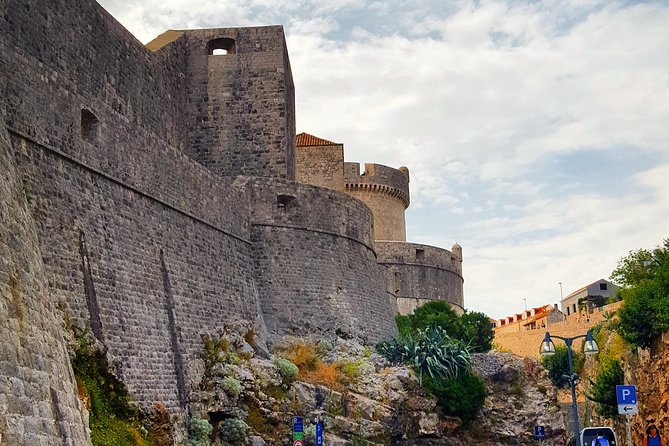
Rector’s Palace is another major highlight. The name can be misleading if you picture a permanent monarch’s residence. The rector was part of the republic’s governing structure, and the palace reflects the city’s careful balance of authority, ceremony, and limits on personal power.
The guide’s explanation is especially helpful here because Dubrovnik’s government does not fit neatly into the modern categories you may carry with you. The palace was a workplace, official residence, and symbol of public authority. It shows how the city presented power while trying to prevent one person from controlling the whole state.
The strongest part of this stop is likely the interpretation rather than the amount of time spent inside. The supplied tour details do not promise admission to every interior space, so you should treat the walk as an orientation to the palace and its role. If you want an extended indoor visit, check separate admission details before booking.
Same harbour, a completely different sort of day:
- Blue Cave Small-Group Boat Tour from Dubrovnik
★ 5.0 · 9,360 reviews - Full-Day Dubrovnik Elaphite Islands Cruise with Lunch and Drinks
★ 5.0 · 8,823 reviews - Dubrovnik: Epic Game of Thrones Tour + Lokrum & Saver Option
★ 4.9 · 5,995 reviews - Dubrovnik: Elaphiti Islands Full-Day Cruise with Lunch
★ 5.0 · 5,938 reviews
Orlando’s Column and the meaning of freedom

Orlando’s Column gives the tour a chance to explain Dubrovnik’s identity. The monument is connected with the city’s freedom, and its location in the central public area makes sense. This was a place where civic messages, celebrations, and official business could be seen by the public.
A good guide can make a column feel less like background scenery. Here, the subject is not only the monument itself, but the pride Dubrovnik took in governing itself and preserving its position among stronger powers.
The guide feedback places strong emphasis on storytelling. Ines is praised for combining history, local knowledge, and personal stories, while another description highlights an easy pace and clear English. That matters at a stop like this, where a few well-chosen explanations can do more than a long list of dates.
Onofrio’s Fountain and the 12-kilometre aqueduct
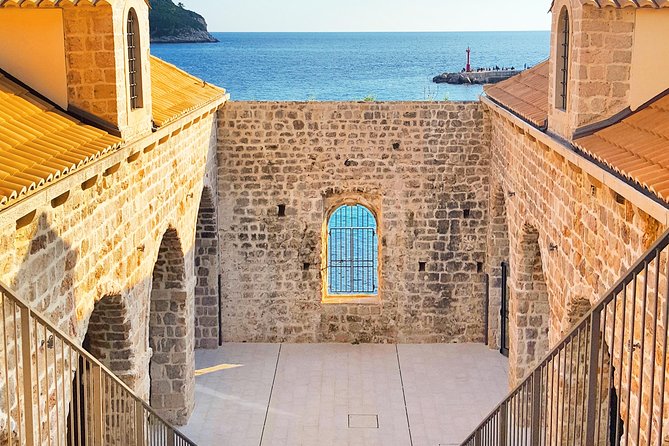
Onofrio’s Fountain is one of the most distinctive stops because it links Dubrovnik’s beauty to a very practical problem: water. The fountain was built in the 15th century at the end of a 12-kilometre aqueduct that supplied the city.
That fact changes how you look at the Old Town. A fortified city needs more than walls. It needs a dependable water supply, especially during a siege or a dry spell. The aqueduct shows the planning and engineering required to support life inside the walls.
You can refresh and drink water from the fountain during the tour, according to the experience details. This is a small but memorable part of the walk. It turns a history lesson into something physical and immediate, although you should not rely on this as your only water stop in hot weather.
The fountain also gives the guide a chance to explain how Dubrovnik developed. The city’s survival depended on systems that are less glamorous than palaces but just as important. I find this kind of stop more rewarding than a route made only of famous façades.
The Franciscan Monastery and Orlando’s neighboring landmarks
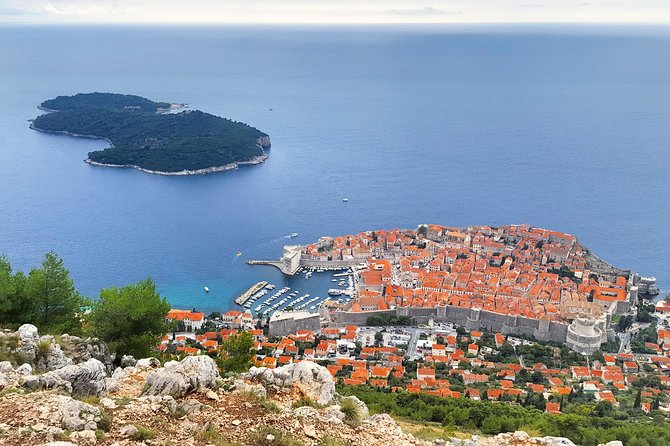
The Franciscan Monastery adds a religious and cultural layer to the walk. You see it as part of the Old Town’s network of churches, public spaces, and working institutions, rather than as an isolated sight.
The tour details do not promise a full interior visit or a detailed examination of every monastery collection. Instead, you should expect the guide to explain its place along the route and in Dubrovnik’s past. That distinction matters if you are booking because of a particular interior, pharmacy, or museum feature. Confirm what is open separately if that is your main goal.
The route around the monastery and central monuments can be busy. A group of up to 30 people may need to pause at the side of the street while the guide speaks. The pace has been praised as thoughtful, but the Old Town itself can affect how smoothly the walk moves.
The Cathedral of the Assumption after the 1667 earthquake
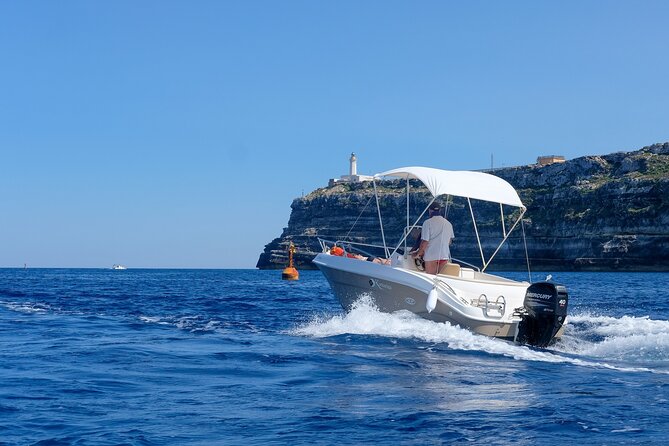
The Cathedral of the Assumption brings the walk to another major turning point: the earthquake of 1667. The present church is a baroque building constructed after that devastating event, so it offers a visible lesson in how Dubrovnik rebuilt.
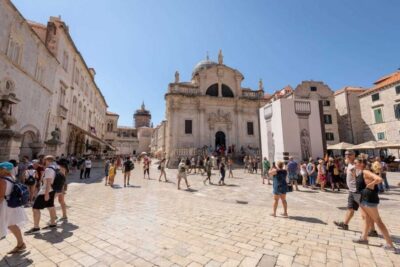
The cathedral is not just a religious sight. It helps explain why parts of Dubrovnik look older than they actually are, and why the city’s architecture includes layers from different periods. A guide can show you how disaster reshaped the town while also explaining the importance of the cathedral to civic life.
As with the other landmarks, the supplied details do not promise admission to every interior area. You should expect an explanation and an exterior or route-based visit unless your guide confirms otherwise. Dress respectfully if you plan to enter a church, and remember that religious sites may have their own visiting rules.
What the guide adds
The guide is the main reason to choose this experience over walking the same streets with a map. The tour includes a licensed guide, and English is the offered language.
Ines receives repeated praise for her command of Dubrovnik and Croatian history, her friendly manner, and her useful local recommendations. One comment refers to the guide as Ynez, which may be a different spelling of Ines. The important point for you is that the strongest feedback centers on a guide who explains clearly, answers questions, and keeps the walk enjoyable rather than turning it into a dry lecture.
The comments also praise the balance between facts, local stories, and personal context. That balance is valuable in Dubrovnik, where a long sequence of dates can blur together. The best moments are likely to be the connections: water supply and city growth, the rector and public power, the earthquake and the cathedral, freedom and Orlando’s Column.
One poor experience involved a last-minute cancellation caused by a guide becoming ill in extreme heat. The payment was refunded in full, and this appears to have been an unusual health emergency rather than a normal feature of the tour. Still, if you have a tight cruise departure or a nonrefundable appointment afterward, leave some time between this walk and your next commitment.
Is $33.61 good value?
At $33.61 per person, the tour is priced as a modest introduction rather than a full-day historical program. You are paying for about 90 minutes with a licensed guide, not for entrance tickets or an extended museum visit.
I consider that fair value if you want orientation, context, and a reliable route through the major sights. The price is easier to justify when you are new to Dubrovnik and want help deciding which places deserve more of your own time later.
The extra cost is the City Walls, listed at 35 euros per person. That is a separate expense and can cost more than the walking tour itself. Plan your budget with both activities in mind if the walls are a priority.
This tour may be less useful if you have already spent several days exploring the Old Town and have read extensively about its monuments. In that case, the value depends on the guide’s stories and local perspective, rather than on seeing sights you have not yet encountered.
Who should book this walk?
I would choose this tour if you want a short, structured introduction to Dubrovnik’s central history. It suits first-time visitors, people arriving for a limited stay, and anyone who prefers explanations to guidebook reading.
It is also a good fit if you want to learn how the city functioned, not just collect photographs. The aqueduct, republic government, earthquake rebuilding, and public monuments give you a stronger framework for the rest of your visit.
You may want something else if your main goal is a long City Walls walk, extensive interior visits, or a private experience. City Walls tickets are not included, and a group of up to 30 can feel less personal than a small-group or private tour.
The experience has a 4.8 rating, with 95 percent recommended, and the strongest praise focuses on the guides’ clear English, local knowledge, friendly style, and well-managed pace. Those are exactly the qualities I would want from a short city introduction.
FAQ
Where does the Dubrovnik walking tour start?
The tour starts at Pile Gate. The listed meeting address is Art Go’Den, Brsalje ul. 1, 20000 Dubrovnik, Croatia. Check your confirmation for the exact meeting instructions.
Where does the tour finish?
The activity ends back at the meeting point.
How long does the walking tour last?
The tour lasts approximately 1 hour and 30 minutes.
Is the tour offered in English?
Yes. English is the listed tour language.
Are City Walls tickets included?
No. City Walls tickets are not included. The listed price for those tickets is 35 euros per person.
What landmarks are covered?
The route includes the Old Town, Franciscan Monastery, Orlando’s Column, Onofrio’s Fountain, Rector’s Palace, Sponza Palace, and the Cathedral of the Assumption. Sponza Palace is listed as an itinerary stop.
How many people can join the tour?
The maximum group size is 30 people.
Can I cancel for a full refund?
Yes, if you cancel at least 24 hours before the experience start time. Cancellations made less than 24 hours in advance are not refunded, and changes within that period are not accepted.
Should you book it?
Book this tour if you want a clear introduction to Dubrovnik’s main Old Town sights, delivered by an English-speaking licensed guide in a manageable 90-minute format. Ines, also referred to as Ynez in one description, is particularly associated with the friendly, story-led style that makes the walk useful rather than merely factual.
Skip it if you mainly want City Walls access, since that ticket costs extra, or if you prefer exploring alone at your own pace. For a first visit, though, the combination of Sponza Palace, Rector’s Palace, Onofrio’s Fountain, Orlando’s Column, the monastery, and the cathedral gives you a solid framework for understanding Dubrovnik before you wander on your own.
More Old Town walking tours in Dubrovnik
- Dubrovnik: Old Town Walking Tour
★ 4.8 · 5,174 reviews - Dubrovnik Discovery Old Town Walking Tour
★ 5.0 · 4,458 reviews - Dubrovnik: Game of Thrones Walking Tour
★ 5.0 · 1,732 reviews - Dubrovnik: City Walls Early Morning or Sunset Walking Tour
★ 4.8 · 1,523 reviews
Just added around Dubrovnik
- Kotor, Perast, Sv.Stefan and Budva – Montenegro Private Tour★ 5.0 · 21 reviews
- Dubrovnik Walking Tour★ 5.0 · 4 reviews
- Dubrovnik Sunset Tour with Scenic Views and Local Wine★ 5.0 · 6 reviews
- Private Boat Tours Dubrovnik Beach stops and Blue Cave tour★ 5.0 · 7 reviews
- Dubrovnik Private Transfer & Taxi Service★ 5.0 · 41 reviews
- Full Day Dubrovnik Island Private Boat Tour★ 5.0 · 17 reviews
- Dubrovnik sunset panorama & wine★ 5.0 · 13 reviews
- Dubrovnik by Night, History, Wine & Bites★ 5.0 · 41 reviews
Dubrovnik History Tours, compared.

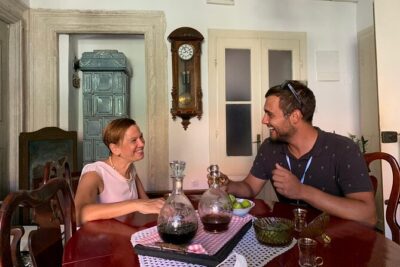
Dubrovnik History, Sweets & Liquors in a Private Palace (PRIVATE)
Read our review →Browse the lists this tour appears in