
Reviewed · DUBROVNIK HISTORY TOURS
Guided Tour to Kupari From Holiday Resort to War Zone
Kupari is not a polished sightseeing stop. It is an abandoned seaside resort where grand hotels, an old pool, and empty halls still show the gap between Yugoslavia’s holiday dream and the damage of the Homeland War. Guide Vedran helps you read the ruins instead of simply wandering past them.
I like the personal history and the way the tour links Kupari to the wider Dubrovnik region. I also like the chance to see a place few standard city tours explain, including the former military resort and its ties to Yugoslavia’s army officers.
The main concern is practical: the site has faced redevelopment plans and at least one serious booking failure was reported, with a guest reaching Kupari only to find that the operator had no record of the reservation. Confirm the tour before setting out, especially if you must pay for separate transport.
Key points to know before booking
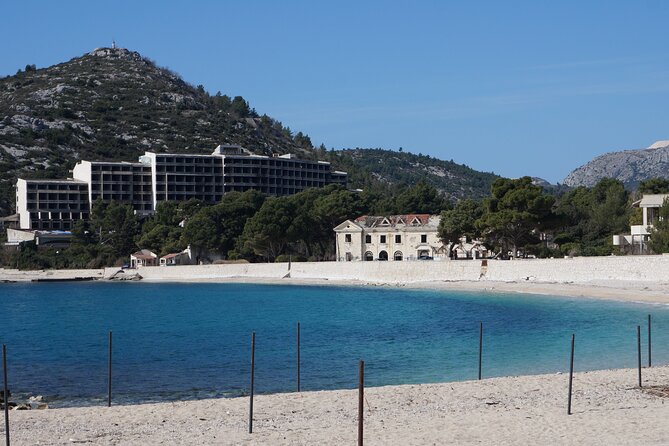
- Kupari’s abandoned hotels: See damaged resort buildings, old reception areas, bars, and an Olympic-sized swimming pool.
- A military holiday center: Learn why Kupari was built mainly for officers of the former Yugoslav National Army.
- Vedran’s personal perspective: The guide explains the Homeland War with first-hand local context from his youth.
- A short, focused visit: The tour lasts about two hours, with roughly one hour at Kupari and 30 minutes at the beach.
- A useful beach finish: Kupari Beach remains a pleasant place for a swim after the history lesson.
- Small enough to stay manageable: The maximum group size is 30, and the experience is offered in English.
Why Kupari is more than an abandoned hotel stop
From a distance, Kupari can look like a collection of empty buildings beside a beautiful bay. That first impression is part of its power, but it is not enough to understand the place.
After the Second World War, Kupari became a resort in the former Yugoslavia. It was intended mainly for military personnel, especially officers of the Yugoslav National Army. The complex later welcomed important holidaymakers and developed into one of the region’s notable seaside resorts during the 1970s and 1980s.
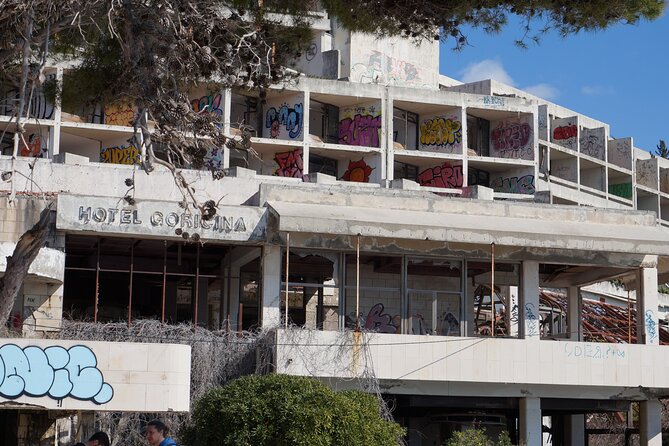
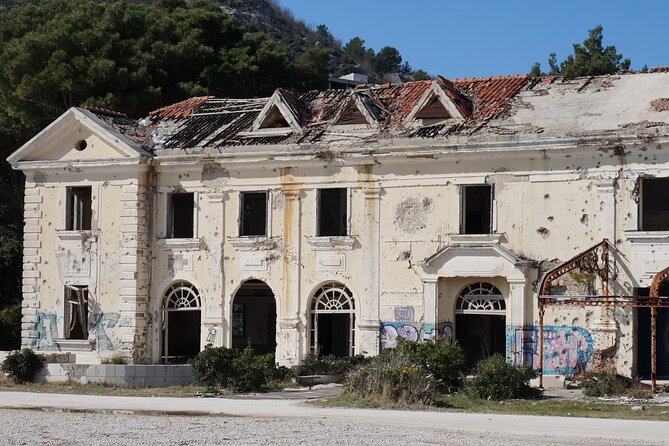
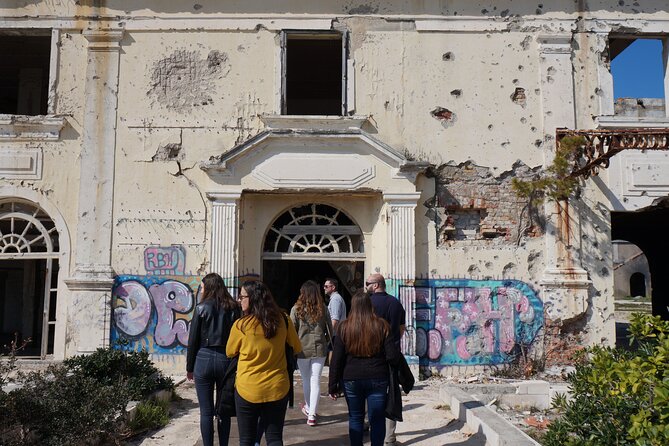
The story then turns sharply. During the Homeland War, the resort was heavily attacked. The hotels were damaged, abandoned, and never restored. Shell scars remain visible, and the empty structures now sit beside a beach that still looks inviting.
I think this contrast is the reason to book the tour. You are not only looking at ruins. You are seeing a former symbol of privilege and leisure, then learning how war changed its meaning.
More history tours in Dubrovnik:
- Dubrovnik Old Town History Walking Tour
★ 5.0 · 1,684 reviews - Game of Thrones & History of Dubrovnik Tour
★ 5.0 · 628 reviews - Dubrovnik: Old Town History Walking Tour
★ 4.9 · 474 reviews
Meeting Vedran at the Sheraton in Srebreno
The tour begins at 9:00 am outside the Sheraton Dubrovnik Riviera Hotel in Srebreno. The address is Šetalište Dr. F. Tuđmana 17, 20207 Srebreno, Croatia, and the activity returns to this same meeting point.
That start location makes the tour especially practical if you are staying in Srebreno, Mlini, or nearby parts of the Dubrovnik Riviera. If you are based inside Dubrovnik’s Old Town, check your transport plan carefully. The experience does not state that transport from the Old Town is included, so you should not assume a hotel pickup.
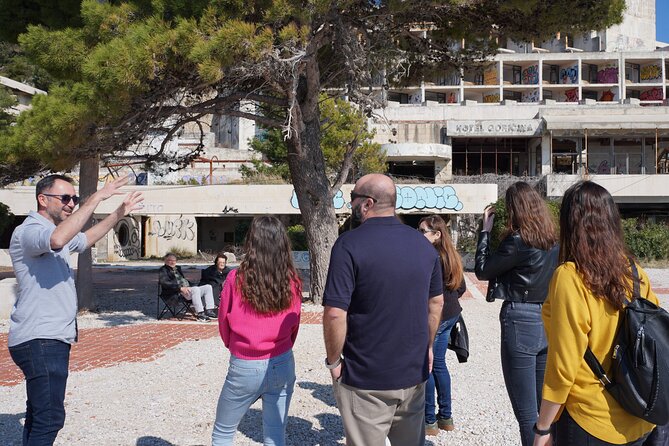
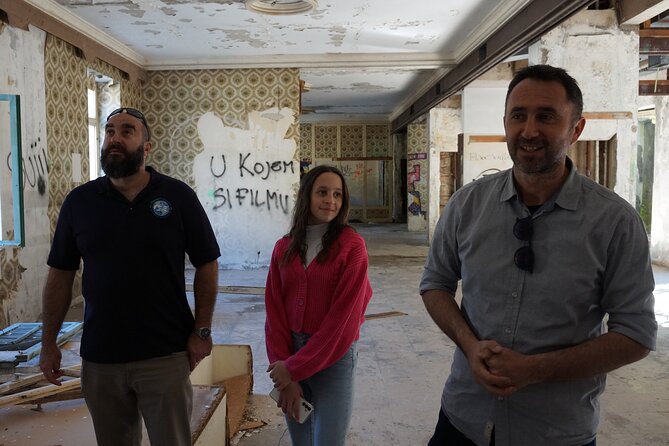
Vedran is the guide most closely associated with this experience. His strength is not just dates and names. He brings a local and personal view of the Homeland War, having experienced the period as a teenager. That matters at Kupari, where the damage is physical but the subject is also personal.
The tour is offered in English. The maximum group size is 30, so it may not always be an intimate private walk. At the same time, the group limit keeps it from becoming an uncontrolled crowd moving through the ruins.
Walking through Kupari’s abandoned resort
The first major part of the tour spends about an hour at Kupari itself. This is where the buildings carry most of the story.
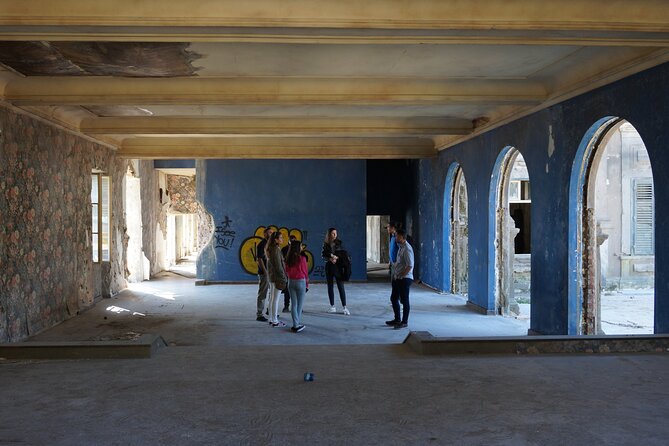
You might see the remains of several derelict hotels, including original reception desks and bar areas. An Olympic-sized swimming pool is also still present. These details help you picture Kupari as a working resort rather than a random collection of empty shells.
I find those ordinary features especially useful. A damaged wall can be hard to interpret. An old reception counter tells you how the building functioned. A pool gives the resort a human scale. You can imagine the noise, movement, and social life that once filled the site without needing a museum display.
The guide also explains Kupari’s earlier connection to a tile factory. The factory supplied the red roof tiles used in Dubrovnik, adding an unexpected layer to the area’s story. Kupari was not created from nothing as a holiday center. Its earlier industrial role formed part of the local economy.
The hotels were designed for a particular system. This was not simply a commercial beach resort aimed at anyone who could afford a room. Its main purpose was connected to the Yugoslav military, particularly senior officers. That background helps explain the scale and style of the complex.
The tour also covers Kupari’s more glamorous years. The resort attracted wealthy and famous visitors, with Indira Gandhi and Sophia Loren among the names linked to its past. That detail gives the abandoned buildings another sharp contrast. A place once associated with status and comfort is now marked by broken windows, exposed interiors, and wartime damage.
You should expect the site to feel sobering. The tour does not treat the ruins as a theme park. Vedran’s approach, as described in the experience details, is informative and personal without pushing the subject into needless darkness. That balance is valuable, especially if you want to understand the war without spending the whole morning in a grim mood.
Reading the shell damage and the war story
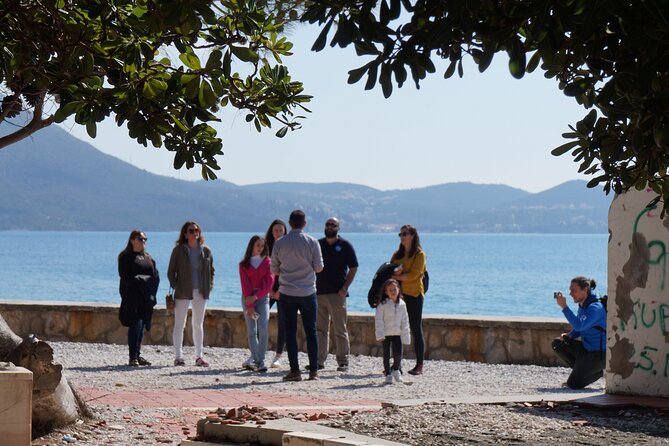
The strongest part of the experience is the connection between the buildings and the Homeland War. You can see scars from shelling, but the guide supplies the meaning that the structures cannot provide on their own.
A self-guided walk would show you broken concrete and empty rooms. It would not necessarily tell you why Kupari mattered, who used it, how the conflict affected the region, or what happened after the fighting. Vedran puts those pieces together.
I appreciate that the tour does not reduce the war to a few dramatic facts. The resort’s destruction is part of the wider history of Dubrovnik and southern Croatia. The setting also makes the story immediate. You are standing in the place where military leisure, public prestige, and later violence met.
The emotional tone can vary depending on how much you choose to ask. Vedran is described as willing to answer questions and to share a personal perspective. If you want more than the basic timeline, this is the moment to ask about local life during the war and the effect on the surrounding area.
Still, this is not a war museum with a large collection of exhibits or formal memorial displays. Much of the evidence is architectural. If you prefer a highly structured presentation with photographs, artifacts, and maps, you may find the experience less complete than a museum visit.
A handful more Dubrovnik days to weigh up
- Dubrovnik: Sea Kayaking&Snorkelling Guided Day/Sunset Tours
★ 4.8 · 1,554 reviews - Dubrovnik: Old Town & City Walls Guided Tours Combo
★ 4.8 · 697 reviews - Dubrovnik Food and Drink Walking Tour with a Local Guide
★ 5.0 · 654 reviews - From Split & Trogir: Dubrovnik Guided Day Tour
★ 4.6 · 313 reviews
The beach at Kupari and the resort’s strange afterlife
The itinerary gives about 30 minutes to Kupari Beach. This part adds a welcome change of pace after the hotel ruins.
The beach is still considered one of the best in the area, and it offers the chance to swim after the tour. The contrast is striking. Behind you are damaged hotels and the remains of a failed resort. In front of you is the Adriatic setting that made Kupari attractive in the first place.
I would treat the beach time as flexible rather than as a guaranteed long swim. The whole experience lasts about two hours, and the schedule divides time between the resort and the beach. If you are hoping to stay longer, you may be able to look around after the guided portion, but plan your day on the basis of the stated tour duration.
The beach also helps explain why redevelopment plans have repeatedly interested investors. Kupari has a strong natural setting and a built-in story. The old resort has not been restored, but its location remains valuable.
That unresolved future is part of the visit. You are seeing Kupari at a particular moment, before the site may change again. On the other hand, redevelopment can affect access and tour availability. This is the most important practical warning attached to the experience.
What the $60.01 price buys you
At $60.01 per person, this is not a cheap way to spend two hours if you only want a beach walk. Admission to Kupari is listed as free, so the fee pays for the guided interpretation rather than an entrance ticket.
For me, the value depends on your interest. If you already know the history of the former Yugoslavia and feel comfortable identifying abandoned buildings on your own, you could visit the area without paying for a guide. The tour becomes worthwhile when you want context, a clear route, and an explanation of what you are seeing.
Vedran’s personal connection is the most important part of that value. The abandoned resort is easy to photograph, but much harder to understand. The guide adds the story of the military resort, the famous visitors, the tile-making past, and the war damage in a way that connects the separate pieces.
The price also buys a focused morning experience. You do not give up a full day of sightseeing, and the tour ends back at the starting point. For someone with several days in Dubrovnik, that makes Kupari an efficient addition to the itinerary.
I would not choose it purely for entertainment. This is a history tour in a damaged place, with a beach stop added at the end. You should be comfortable with a reflective subject and with the rough condition of the site.
Practical details that can make or break the visit
Wear shoes suitable for uneven ground. The available information does not promise polished paths through every part of the abandoned complex, so sensible footwear is the safe choice.
Bring water and sun protection, particularly in warmer months. The beach may tempt you to stay, but the tour itself is still an outdoor walk around exposed buildings.
Use insect spray. One guest specifically arrived without it and regretted the omission. That is a small detail, but it can make a real difference around an overgrown abandoned site.
You can bring a service animal, and the activity is near public transportation. Most people can participate, though the site itself may be more demanding than a standard paved city walk. The tour is mobile-ticketed and confirmation is issued at booking.
The cancellation policy is simple: you can receive a full refund if you cancel at least 24 hours before the 9:00 am start. Cancellations or changes made inside that window are not accepted for a refund.
There is one operational issue I would take seriously. A booking problem was reported in which the guest arrived after paying for transport, while the local operator had no record of the reservation and said the location was affected by redevelopment. Other details describe successful tours, including a personal visit arranged directly with Vedran, but the conflicting information means you should confirm the date, meeting point, and current availability before traveling to Srebreno.
Who will get the most from this Kupari tour
I would recommend Kupari to you if you want to see a side of the Dubrovnik area beyond polished stone streets and postcard beaches. It suits people interested in modern Balkan history, military history, architecture, abandoned places, and local stories.
It is also a good choice if you prefer a guide who can explain sensitive events in a measured way. Vedran’s personal perspective gives the tour an emotional center without making the experience needlessly bleak.
Families with older children may find the site thought-provoking, but the subject matter and damaged buildings require attention. Young children who mainly want a beach morning may get little from the guided history.
If you have only one day in Dubrovnik, I would put the Old Town first. Kupari makes better sense when you have enough time to look beyond the main sights. It is also a natural fit for a stay in Srebreno or Mlini, since the meeting point is close to that part of the coast.
Should you book Guided Tour to Kupari From Holiday Resort to War Zone?
Book it if you want the story behind the ruins, not just a quick look at abandoned hotels. The combination of Kupari’s military past, the visible shell damage, Vedran’s local perspective, and the beach makes this a memorable two-hour outing.
Skip it if you want a carefree beach excursion, a fully restored historic site, or a guaranteed private tour. The buildings are damaged, the subject is serious, and the current redevelopment situation creates some uncertainty.
My advice is to book only after confirming that the tour is operating on your date and that the meeting point is still correct. Once that is settled, the $60.01 fee is reasonable for a guided account of a place that is fascinating but easy to misunderstand on your own.
FAQ
Where does the Kupari tour begin?
It begins at the Sheraton Dubrovnik Riviera Hotel, Šetalište Dr. F. Tuđmana 17, 20207 Srebreno, Croatia.
What time does the tour start?
The scheduled start time is 9:00 am.
How long does the experience last?
The tour lasts approximately two hours. About one hour is allocated to Kupari, with about 30 minutes at Kupari Beach.
Does the tour return to the starting point?
Yes. The activity ends back at the meeting point at the Sheraton Dubrovnik Riviera Hotel.
Is admission to Kupari included?
Admission to Kupari is free. The price of $60.01 per person covers the guided experience rather than an admission ticket.
Is the tour offered in English?
Yes. The experience is offered in English.
How large can the group be?
The maximum group size is 30 people.
Can I cancel for a full refund?
Yes, if you cancel at least 24 hours before the experience start time. Cancellations or changes made less than 24 hours before the start are not accepted for a refund.
Just added around Dubrovnik
- From Dubrovnik: Private Island-Hopping Customizable Cruise★ 5.0 · 5 reviews
- Traditional Brunch and Painting Class in Old Town Dubrovnik★ 4.7 · 3 reviews
- Full- Day Private Speedboat Tour in Dubrovnik on Elaphiti Islands★ 5.0 · 21 reviews
- Elaphiti Islands Private Dubrovnik Boat Unique Experience★ 5.0 · 10 reviews
- Wine Lover’s Tour from Dubrovnik★ 5.0 · 5 reviews
- PRIVATE Wine Tour to Konavle country side★ 5.0 · 11 reviews
- Wine tour peninsula Pelješac★ 5.0 · 3 reviews
- Welcome to Dubrovnik Walking Tour★ 5.0 · 36 reviews
Dubrovnik History Tours, compared.






Dubrovnik History, Sweets & Liquors in a Private Palace (PRIVATE)
Read our review →Browse the lists this tour appears in