
Reviewed · DUBROVNIK HISTORY TOURS
History Walking Tour: Charm of Old Dubrovnik
Dubrovnik’s past comes into focus on this compact walk from Ploče Gate to Pile Square. Dorotea guides a group of no more than six through the old harbor, the former seat of government, baroque churches, and streets shaped by the Republic of Dubrovnik. The route gives you a useful first look without asking you to spend a full day indoors.
I like the personal scale, since six people is small enough for questions and a proper conversation. I also like the mix of big civic sights and small details, from the city’s old shipyard to the granary that now houses the Rupe Museum. The main drawback is simple: you do not enter the city walls or museums, so visitors wanting interiors and sweeping wall views will need a separate ticket and more time.
Key points to know before you book
- A small group of six or fewer: Dorotea can give the walk a personal feel rather than delivering a speech to a crowd.
- A clear east-to-west route: You begin at Ploče Gate and finish near Pile Gate, covering the Old Town without doubling back.
- Strong Republic-era focus: Rector’s Palace, the harbor, and the city gates help explain how Dubrovnik governed and defended itself.
- Churches with different stories: St. Blaise’s Church and the Jesuit Church show the religious and artistic sides of the city.
- No museum or city-wall admission: You see the outside of these landmarks, but tickets and interior visits are not part of the walk.
- About 90 minutes to two hours: The length suits a first orientation, a port day, or a morning before further sightseeing.
Starting at Ploče Gate on Dubrovnik’s eastern side
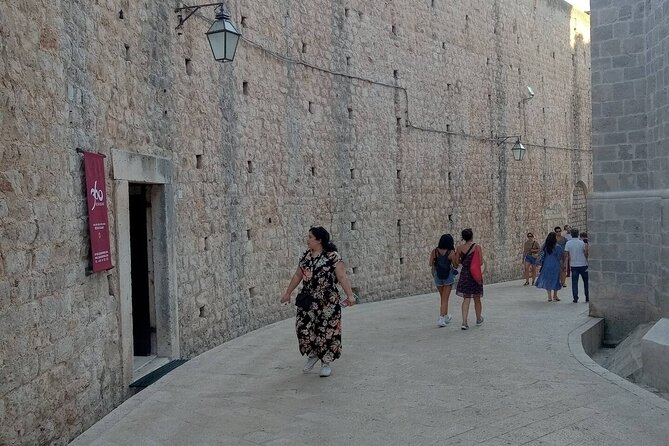
The tour begins at Ploče Gate, the eastern entrance to the Old Town. This is a sensible starting place because the gate immediately puts Dubrovnik’s defenses and geography in front of you.
Here, Dorotea gives general background about Dubrovnik and its past before leading you into the historic center. The opening section lasts about 30 minutes, making it the longest stop on the route. That extra time is useful. Dubrovnik can look like a beautiful maze at first, and a good introduction helps you understand why the city was built in this tight, protected form.
You should expect an outdoor explanation rather than a formal museum presentation. The gate itself is free to see, and you do not need an admission ticket for this part of the walk.
Starting outside the walls also gives the route a natural sense of arrival. You cross from the modern city into the old center, then spend the rest of the walk moving through places that once handled trade, government, faith, and defense.
More history tours in Dubrovnik:
- Dubrovnik Old Town History Walking Tour
★ 5.0 · 1,684 reviews - Game of Thrones & History of Dubrovnik Tour
★ 5.0 · 628 reviews - Dubrovnik: Old Town History Walking Tour
★ 4.9 · 474 reviews
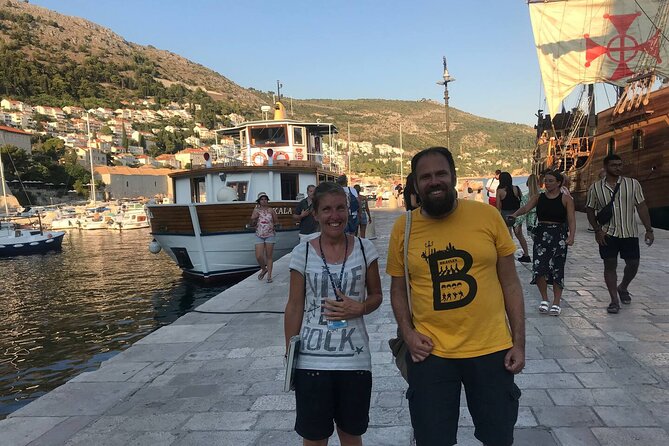
The old city harbor and Dubrovnik’s working past
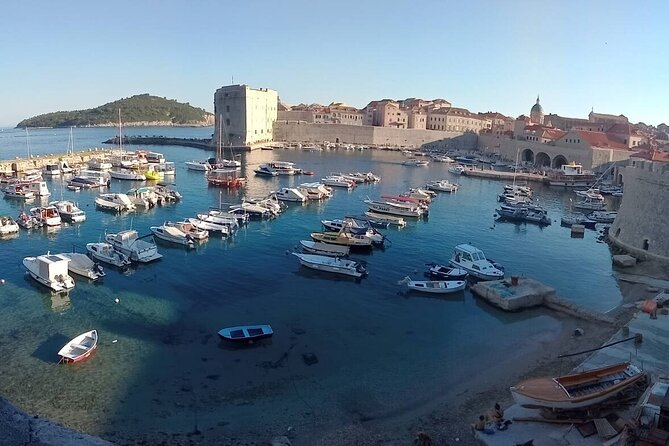
The next major stop is the City Harbor, where you spend about 15 minutes. Many visitors see the harbor mainly as a pretty waterfront, but the important point here is its practical role.
The harbor was one of the oldest and most important parts of the city during the Republic of Dubrovnik. It also served as the oldest shipyard, where large boats could be repaired. That detail changes the way you read the waterfront. This was not only a scenic edge to the city. It was a place tied to transport, trade, repairs, and the daily work that kept Dubrovnik functioning.
I like this stop because it gives the tour a useful counterweight to the grand churches and palaces. Dubrovnik’s story is not only about stone walls and powerful officials. The harbor points to the ships and skilled workers that supported the republic.
The visit is brief, so do not expect a long maritime lecture. Instead, use it as a foundation for understanding why the city became such an important Adriatic center.
St. Blaise’s Church and the city’s patron saint
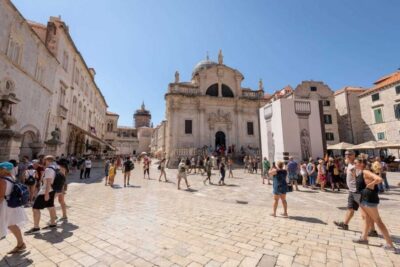
The walk continues to the Church of Saint Blaise, with roughly 10 minutes devoted to religion in Dubrovnik and the importance of St. Blaise.
This is a good place to learn how religious belief shaped public life in the city. St. Blaise is especially important to Dubrovnik, and Dorotea explains why the saint holds such a strong place in the city’s identity.
The short stop works well for visitors who want context without committing to a long church-focused tour. It also helps connect the city’s religious landmarks with its civic life. In Dubrovnik, faith was not separate from public traditions and community identity.
The description does not include an interior visit or a special church admission. Plan to listen outside and around the site rather than treating this as a guided tour of the church’s interior.
Rector’s Palace and the machinery of the republic
Rector’s Palace is one of the most important stops on the route. The building served as the administrative center of the Dubrovnik Republic, and Dorotea uses about 15 minutes to discuss the government, politics, and beliefs of the republic.
This is where the tour’s historical focus becomes clearest. Instead of seeing Dubrovnik only as an old walled town, you begin to picture it as a self-governing state with its own political system. The palace gives that story a physical anchor.
The stop is particularly useful if you want to understand how decisions were made and how public authority operated. You hear about the government rather than simply photographing the building and moving on.
Admission to Rector’s Palace is not included. The tour does not visit museums, so you should not expect to go inside as part of this walk. If the palace interior is high on your list, you will need to return independently and buy a separate ticket.
That limitation is worth noting before booking. The outside explanation can help you decide if an interior visit deserves more of your time, but it cannot replace that visit.
More Old Town walking tours in Dubrovnik:
- Dubrovnik: Old Town Walking Tour
★ 4.8 · 5,174 reviews - Dubrovnik Discovery Old Town Walking Tour
★ 5.0 · 4,458 reviews - Dubrovnik: Game of Thrones Walking Tour
★ 5.0 · 1,732 reviews - Dubrovnik: City Walls Early Morning or Sunset Walking Tour
★ 4.8 · 1,523 reviews
The Jesuit stairs and St. Ignatius of Loyola
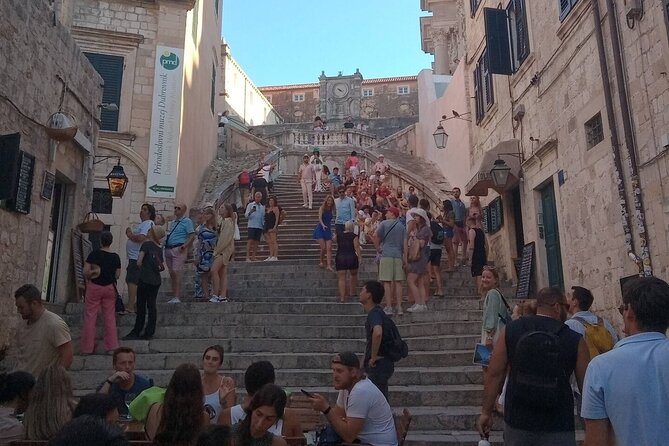
Next comes the Church of St. Ignatius of Loyola, reached by walking up Dubrovnik’s most famous stairs. The stop lasts about 10 minutes and focuses on the Jesuit Church and the surrounding baroque complex.
This is one of the route’s strongest visual moments. The stairs give you a change in level and a memorable approach to the church. They also show a more theatrical side of Dubrovnik, where architecture, elevation, and ceremony work together.
Dorotea presents the complex as one of the city’s finest baroque settings. Even if you are not especially interested in church architecture, the stairs make this part of the walk easy to remember.
The church visit is free according to the tour details, but the walk does not promise a full interior visit. Keep your expectations practical: you are coming for the setting, the outside view, and the explanation rather than a long guided inspection of every chapel or artwork.
Comfortable shoes matter here. The tour is on foot, and the route includes stairs. No special fitness level is listed, but the activity information says most people can take part.
Rupe Museum, an old granary, and a view toward the walls
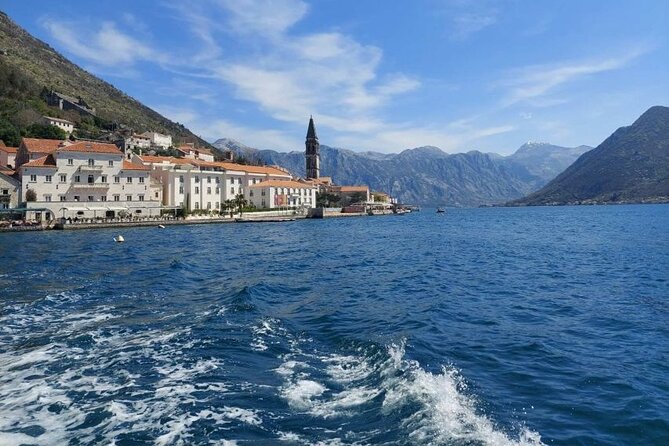
The Rupe Museum is introduced as an ethnographic museum housed in an old granary. You spend about 10 minutes learning why that building matters and hearing an account of how Dubrovnik’s walls were constructed.
This is a nice example of the tour’s habit of connecting a building with a practical story. A granary tells you about food storage and city planning, while the nearby view toward part of the walls brings defense into the picture.
The stop does not include museum admission, and the guide does not take the group inside. That may disappoint anyone hoping to see the ethnographic collection. Still, the exterior explanation gives you a reason to consider returning later if local life and traditional culture interest you.
The view of the walls is also a reminder of what this tour is not. You can learn about the fortifications, but you do not walk on the city walls. For the famous wall circuit, you need a separate ticket and a separate block of time.
Franciscan Monastery and the small square near the main entrance
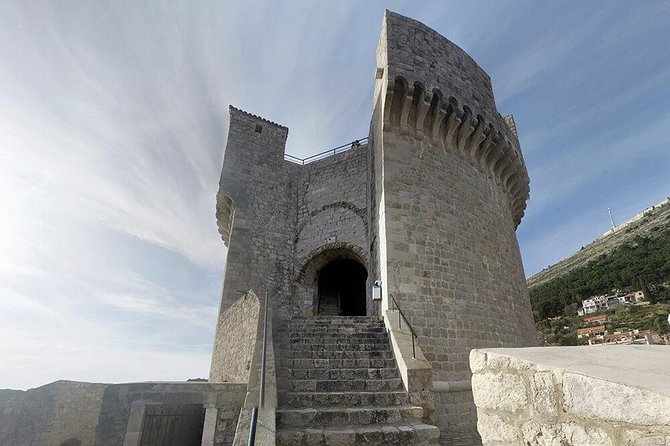
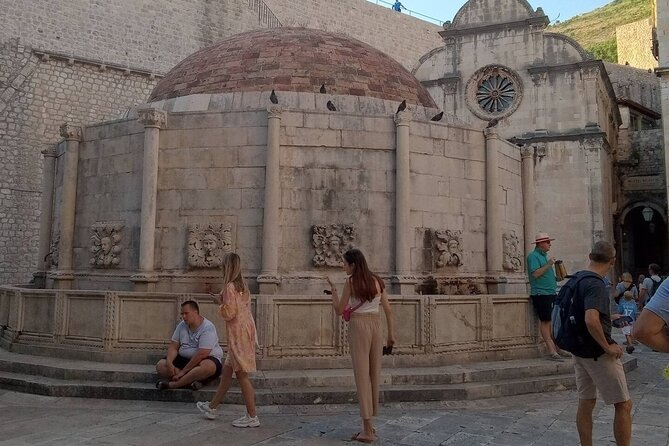
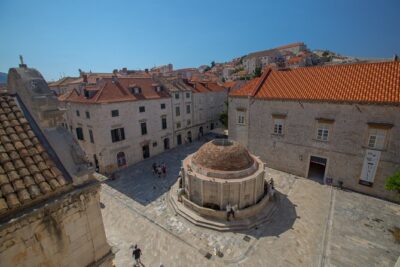
The tour then reaches Poljana Paska Miličevića, a small square associated with the Franciscan Church and Monastery, the Church of St. Saviour, and the Big Onofrio Fountain. The stop takes about 10 minutes.
This cluster of landmarks packs several different stories into a small area. The Franciscan complex includes an old pharmacy, while the fountain adds a practical piece of the city’s public infrastructure. The Church of St. Saviour contributes another layer of religious architecture.
You will hear about these places from outside. Admission to the Franciscan Monastery and its old pharmacy is not included, so anyone eager to see the interior should plan a return visit.
The location is also close to the main entrance to the Old Town. That makes it a useful point for getting your bearings. After several stops deeper inside the historic center, you begin moving toward the western side and the tour’s final viewpoint.
Finishing at Pile Square and the Lovrijenac view
The final stop is Brsalje Street and Pile Square, near Dubravka 1836 Restaurant and Cafe. The walk ends with a view of Lovrijenac Fortress, and Dorotea explains how and why the fort was built.
This is a practical ending. Pile is one of the most recognizable access points to Dubrovnik’s Old Town, and the nearby fortress gives the tour a final defense story to match the opening at Ploče Gate.
The route therefore has a clear shape. You start with an eastern gate, move through the harbor and central civic landmarks, climb to the Jesuit Church, pass the granary and Franciscan complex, and finish with the western approach and Lovrijenac.
The last stop lasts about 10 minutes. It is not a visit to the fortress, and no fortress admission is included. You get the view and the explanation, then finish near a restaurant and a major Old Town entrance. That makes it easy to continue sightseeing, find a meal, or head onward after the tour.
What $47.32 buys you
The price is $47.32 per person. For that fee, you receive a 90-minute to two-hour guided walk, a personal guide, and a maximum group size of six.
I see the value mainly in the small group and the amount of interpretation packed into a short route. Dubrovnik’s landmarks are easy to photograph without help. The reason to pay for this walk is to understand what you are seeing, especially the Republic’s government, harbor, religious traditions, and defensive planning.
The price makes the most sense if you are visiting Dubrovnik for the first time, have limited time, or prefer asking questions rather than using a large audio guide. It is less useful if you already know the city well or mainly want paid entry to museums and the city walls.
Remember that the cost does not cover museum tickets, the city-wall ticket, food, drinks, transport to Ploče Gate, or gratuities. Since the tour finishes at Pile, you also need to arrange your own way back if your plans take you elsewhere.
Group size, timing, and practical details
The tour is offered in English and uses a mobile ticket. Confirmation is sent at booking, and the activity is near public transportation.
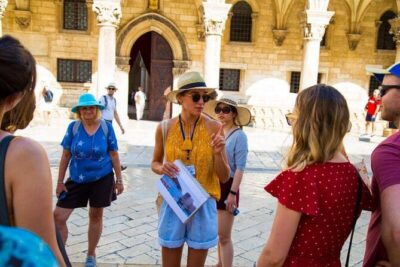
A maximum of six people is a major feature. Dorotea’s passionate approach is best suited to a small setting, where you can hear the history clearly and ask about the places that catch your attention. A larger party may also book, but the stated maximum is six participants.
Allow up to two hours rather than planning a tight connection immediately afterward. The advertised length is approximately one hour and 30 minutes to two hours, and walking times can vary.
The meeting point is Ploče Gate at Ul. Frana Supila 2. The endpoint is Dubravka 1836 Restaurant and Cafe at Brsalje ul. 1. Since transportation to the meeting point is not included, check your route before setting out.
You can cancel for a full refund if you do so at least 24 hours before the start time. Changes or cancellations made within 24 hours are not accepted for a refund, and the cut-off uses Dubrovnik local time.
Who should book the Charm of Old Dubrovnik walk?
I would choose this for a first visit, especially if you want a clear introduction before exploring on your own. It also suits a short stay, since the route covers major parts of the Old Town without taking an entire day.
History-minded visitors will get the most from the focus on the Dubrovnik Republic. The harbor, Rector’s Palace, gates, and fortifications create a useful political and practical story rather than a string of disconnected monuments.
It is also a good match for anyone who prefers small groups. Dorotea is the named local guide, and the strongest praise attached to the tour centers on her enthusiasm and command of Dubrovnik and Croatian history.
You may want something else if your priority is entering buildings. The route does not include museum interiors, the Rector’s Palace interior, the Franciscan Monastery, or the city walls. In that case, book this only as an introduction, then add separate admission visits.
Should you book it?
Book this walk if you want personal guidance, a small group, and a compact history lesson through Dubrovnik’s Old Town. Dorotea’s route gives you the city’s main framework: gate, harbor, government, churches, storage, monastery, and fortress.
Skip it if you already have a detailed plan centered on museum interiors or a walk along the city walls. For first-time visitors with about two hours to spare, the price is fair for the attention and context you receive, especially when four or five other people are the most you may be sharing it with.
FAQ
Where does the walking tour begin?
It begins at Ploče Gate, at Ul. Frana Supila 2 in Dubrovnik.
Where does the tour finish?
The tour ends at Dubravka 1836 Restaurant and Cafe, Brsalje ul. 1, near Pile Square and the main entrance to the Old Town.
How long does the tour last?
The walk lasts approximately one hour and 30 minutes to two hours.
Is the tour offered in English?
Yes. The tour is offered in English.
What is included in the price?
The price includes personal guidance by Dorotea, a small-group format with a maximum of six people, a guided walk through Dubrovnik’s Old Town, and historical stories about Dubrovnik as a republic.
Are museum and city-wall tickets included?
No. Museum admission is not included, the tour does not visit museum interiors, and the walk does not include a city-wall ticket or a walk on the walls.
Can I cancel for a full refund?
Yes, if you cancel at least 24 hours before the scheduled start time. Cancellations or changes made less than 24 hours before the start time are not refunded or accepted.
Just added around Dubrovnik
- From Dubrovnik: Private Island-Hopping Customizable Cruise★ 5.0 · 5 reviews
- Traditional Brunch and Painting Class in Old Town Dubrovnik★ 4.7 · 3 reviews
- Full- Day Private Speedboat Tour in Dubrovnik on Elaphiti Islands★ 5.0 · 21 reviews
- Elaphiti Islands Private Dubrovnik Boat Unique Experience★ 5.0 · 10 reviews
- Wine Lover’s Tour from Dubrovnik★ 5.0 · 5 reviews
- Welcome to Dubrovnik Walking Tour★ 5.0 · 36 reviews
- PRIVATE Wine Tour to Konavle country side★ 5.0 · 11 reviews
- Wine tour peninsula Pelješac★ 5.0 · 3 reviews
Dubrovnik History Tours, compared.

Dubrovnik History, Sweets & Liquors in a Private Palace (PRIVATE)
Read our review →Browse the lists this tour appears in