Reviewed · PRIVATE
Pearls of the Balkans from / to Dubrovnik; Semi – Private Tour
Kotor’s stone lanes, Ohrid’s lakeside churches, and Mostar’s famous bridge are only the opening act. This 8-day Balkan circuit moves through six countries and several very different cultures, with a small group of no more than 10 people and private road transport. It is a fast-moving introduction to a corner of Europe that rewards curiosity.
I like the excellent range of places, from Ottoman old towns to communist-era Tirana and a family-run food farm in Albania. I also like the human touch of a tour leader such as Gesi, who offered strong food advice, or Migen, who adjusted plans when needed. The tradeoff is clear: you cover a lot of ground, so some stops feel like a first look rather than a full visit.
Key points to know
- Six countries in eight days: Croatia, Montenegro, Albania, North Macedonia, Kosovo, and Bosnia & Herzegovina.
- Small-group format: The maximum is 10 people, with private transportation and a professional tour leader.
- Standout cultural stops: Kotor, Berat Castle, Ohrid, Prizren, Blagaj, and Mostar.
- Food with a local focus: Mrizi i Zanave includes a farm visit and time for a traditional lunch, though lunch is not included.
- Three-star accommodation: Rooms are priced on shared double, twin, triple, or quadruple occupancy.
- Plan for long road days: Border crossings and the number of destinations make this an active, tightly scheduled trip.
The route at a glance: Dubrovnik to the wider Balkans
This tour begins and ends around Dubrovnik, but its real subject is the interior of the Balkans. You leave the Croatian coast behind and cross into Montenegro, Albania, North Macedonia, Kosovo, Bosnia & Herzegovina, and Montenegro again before returning to Croatia.
The route gives you a useful contrast between Adriatic towns, Ottoman-era streets, Orthodox religious sites, communist memorials, mountain roads, and lakeside villages. You will not have long, leisurely stays in every place. Instead, the tour gives you a connected story of the region and enough orientation to decide where you may want to return.
The price is $3,434.13 per person. That is a serious sum, but it covers private transport, the tour leader, hotels, tourist taxes, road costs, fuel, international car insurance, and listed entry fees. You pay separately for lunches, dinners, drinks, snacks, souvenirs, and personal expenses. Given the number of countries and border crossings, the value is mainly in the logistics and local guidance, not luxury.
A handful more Dubrovnik days to weigh up
- Mostar and Kravice Waterfalls Tour from Dubrovnik (Semi-Private)
★ 5.0 · 3,125 reviews - Dubrovnik: Blue & Green Caves Private Boat Tour with Drinks
★ 4.7 · 814 reviews - Dubrovnik Private Speedboat Tour to Elaphite Islands with Drinks
★ 5.0 · 660 reviews
Day 1: Kotor’s lanes and Budva’s old walls
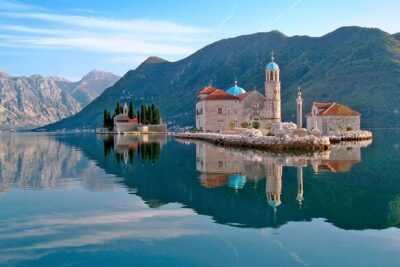
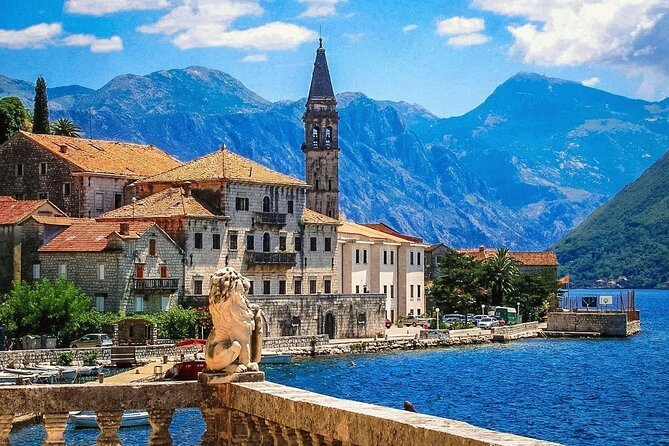
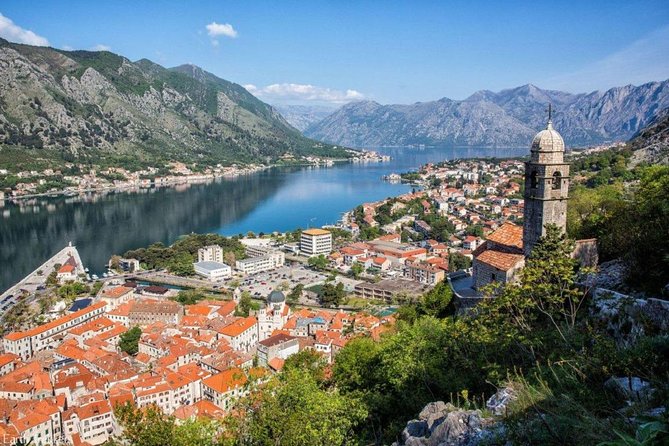
You leave Dubrovnik early and meet the tour leader at the border. The first major stop is Kotor, a UNESCO-listed old town enclosed by stone walls and steep mountains. The two-hour visit focuses on narrow cobbled streets, old churches, and the local meaning of St. Luke’s Church, which represents unity.
Kotor is compact but full of small details. Plaques on older buildings explain their original use and construction dates. The confusing street plan was intentional, designed to make the town harder for raiders to navigate. You can appreciate the joke of it today as you turn through lanes that seem to end and then open into another small square.
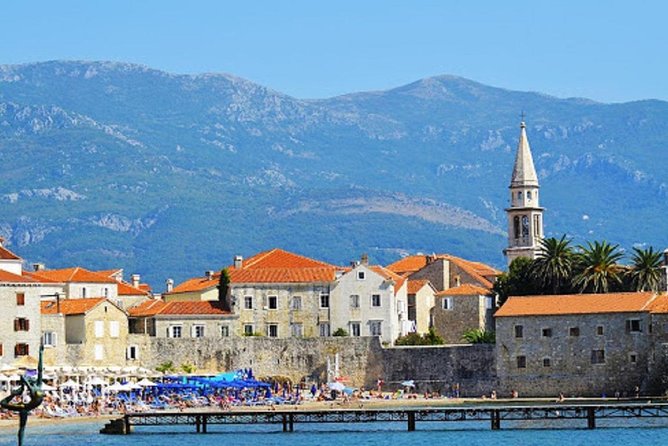
The trip continues to Budva, a popular Montenegrin seaside town. Its old section has medieval buildings and churches such as St. Ivan and St. Mary, while the newer section is filled with modern buildings, restaurants, bars, offices, and shops.
Two hours in each town is enough for a guided introduction, but not enough for every museum or side street. If old towns are your main interest, you may wish you had more time. The benefit is that you see both Kotor and Budva on the same day without arranging border transport yourself.
Day 2: Tirana from communist memory to modern street life
Tirana gives the tour a sharp change of tone. After breakfast and the drive into Albania, you check into your accommodation and begin a city visit focused on food and urban history.
The first stop, Postblloku, is a memorial to political prisoners and Albania’s period of isolation under communist rule. Its position opposite the government building makes the message hard to miss. This is a useful stop because it gives context to the city before you walk into the cafés and shops of Blloku.
Blloku was once reserved for members of Albania’s communist leadership, including Enver Hoxha. Today it is one of Tirana’s most fashionable areas, with cafés, boutiques, and street art. That contrast is one of the most interesting parts of the capital: the same neighborhood has moved from strict political privilege to open public life.
At Skanderbeg Square, you will see the National Museum, the Bank of Albania, the Opera, the statue of national hero Skanderbeg, and Ethem Beu Mosque. The walk continues toward Tirana Castle, now a pedestrian area where older forms and modern businesses sit side by side.
The religious stops are especially useful. Albania was declared the world’s first atheist state in 1967, and religious practice was banned under the communist regime. Passing the Namazgah Mosque, the Orthodox Cathedral, and St. Paul’s Catholic Cathedral shows how visible religious life is again.
The city program is split into several short walks, adding up to about five hours. Wear comfortable shoes and expect a full day after the drive. Tirana is not treated as a quick photo stop, which gives you time to understand how dramatically the city has changed.
Day 3: Berat’s hilltop homes and Ohrid’s lake views
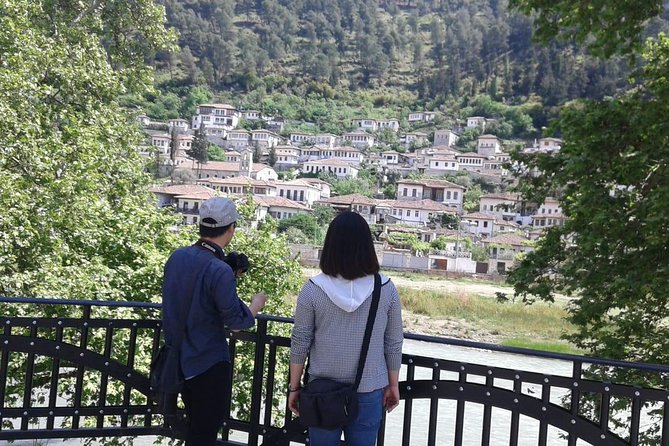
Berat is known as the town of 1,001 windows, a name inspired by its old Ottoman houses climbing the hillsides. The windows appear stacked above one another, giving the town a distinctive look from across the river.
The old stone lanes lead toward Berat Castle, where people still live within the walls. The castle visit includes medieval churches, mosques, museums, and old homes. You also see traces of Albania’s communist period, so the stop is not only about architecture.
The schedule gives about 30 minutes in Berat and 30 minutes at the castle. That is brief for a place with this much to see. The guided format helps you focus, but you should not expect a slow, unplanned wander through every lane.
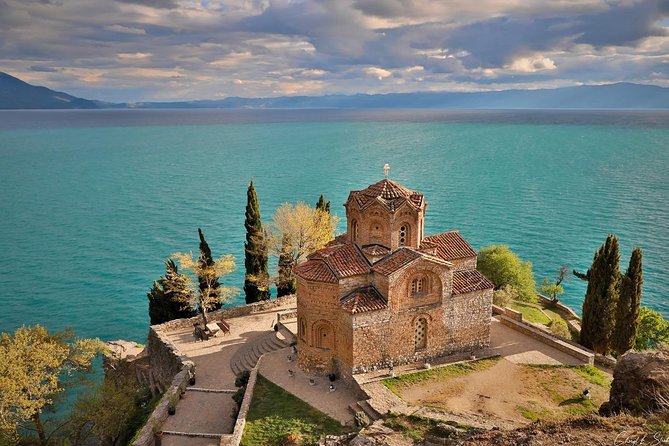
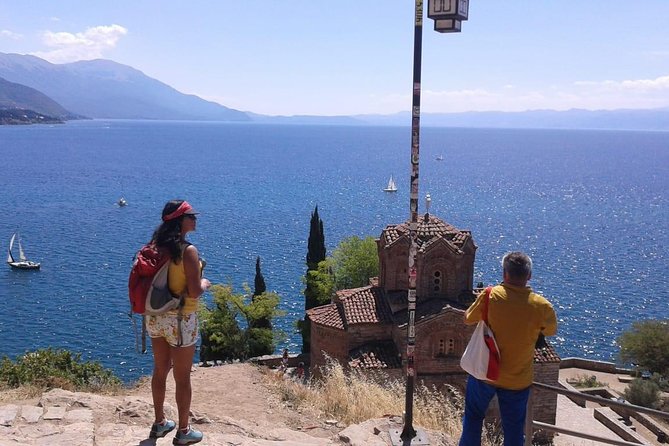
After Berat, the road continues to Ohrid in North Macedonia. Ohrid and Lake Ohrid have UNESCO protection, and the lake is associated with the Roman name Lyhnidas, meaning the Light Lake. The viewpoint at St. John at Kaneo is the visual highlight, with the church above the water and the town’s hills behind it.
Ohrid is also known for its Orthodox churches, with the traditional claim of one church for each day of the year. Its older homes were built on steep ground, with narrow streets, tunnels, and small yards arranged so houses could enjoy lake views.
The handmade paper museum adds a welcome craft-based stop. You learn how paper is made by hand using techniques linked to the period of Gutenberg, and you can buy a sheet as a small, easy-to-pack souvenir. This is the kind of stop that gives the day texture beyond churches and viewpoints.
Same harbour, a completely different sort of day:
- Blue Cave Small-Group Boat Tour from Dubrovnik
★ 5.0 · 9,360 reviews - Full-Day Dubrovnik Elaphite Islands Cruise with Lunch and Drinks
★ 5.0 · 8,823 reviews - Dubrovnik: Epic Game of Thrones Tour + Lokrum & Saver Option
★ 4.9 · 5,995 reviews - Dubrovnik: Elaphiti Islands Full-Day Cruise with Lunch
★ 5.0 · 5,938 reviews
Day 4: Skopje’s divided city and Prizren’s Ottoman center
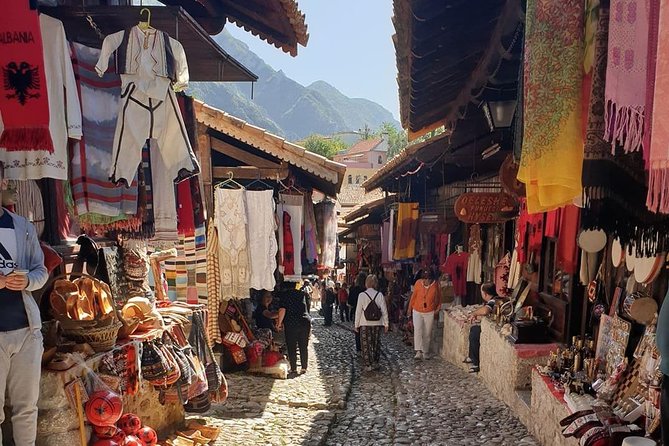
Skopje is a city of contrasts. The Stone Bridge links the newer part of town with the Old Bazaar, while the central area features the large Alexander the Great statue and the Art Bridge lined with statues of Macedonian artists and musicians.
The one-hour city visit covers the bridge, the archaeological museum area, and the Old Bazaar. The bazaar is the heart of the older city, combining shops, streets, and buildings shaped by centuries of Ottoman influence. A cross on the mountain above Skopje is visible from far across the city and has become one of its familiar symbols.
Again, the time is enough to get your bearings, not enough for a full museum day. Skopje can feel visually busy, particularly around the central monuments, but the Old Bazaar gives you a more grounded sense of the city.
Later you cross into Kosovo and reach Prizren, often regarded as the country’s cultural capital. The river runs through the old town, passing beneath several bridges. The city’s position at a crossroads of Illyrian, Byzantine, and Ottoman influences is visible in its buildings, religious sites, and food traditions.
The Sinan Pasha Mosque is the main religious visit. Its interior is known for colorful arabesque patterns, and the 30-minute stop is a good chance to see an Ottoman mosque without spending the whole day indoors.
The final climb is to Kalaja Fortress. The one-hour visit offers a broad view over Prizren and the surrounding hills. This is one of the days when comfortable shoes matter most, since old-town streets and fortress paths can be uneven.
Day 5: Albanian food culture at Mrizi i Zanave
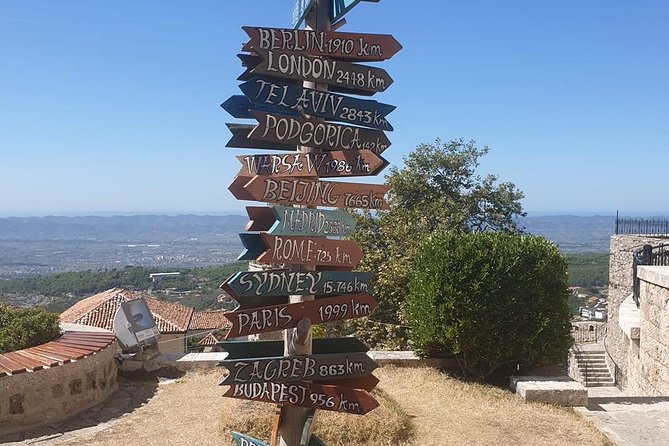
Mrizi i Zanave is one of the most distinctive stops on the route. This slow-food agricultural project combines a working farm, regional products, and a family business that has created jobs for more than 400 people in nearby communities.
You tour the farm, learn how local produce is collected and preserved, and see how old communist buildings were adapted for storage. The visit gives you a practical look at rural Albania rather than only another historic center.
You have free time for a traditional lunch or to buy farm products. Lunch is not included, so budget separately. This is one place where spending a little extra can make sense because the food is tied directly to the farm and the region.
The afternoon brings you to Shkodra, one of Albania’s oldest cities and the namesake of the country’s largest lake. Its castle has walls dating back to the first millennium BCE, and the city was important during the time of the Illyrian king Gent.
The Venetian Mask Factory adds a more playful stop. You watch papier-mâché masks being made and painted by hand, with designs ranging from classic Venetian carnival forms to modern creations. The 30-minute visit is short, but it offers a chance to see local craft production rather than simply shop in a generic souvenir store.
Day 6: Lake Skadar and a quiet hour in Virpazar
The road turns north toward Montenegro and Lake Skadar, also called Lake Shkodra. The lake lies between Albania and Montenegro and is protected as a national park. It supports more than 260 bird species, including pelicans and herons, along with fish and unusual plant life.
The one-hour stop is best for scenery, quiet, and photographs. It is not described as a boat excursion, so do not book this day expecting a lake cruise. You will mainly see the lake region from the road and designated stops.
Virpazar is a small lakeside village known as a gateway to the national park. Its stone bridges and traditional houses give it a slower feel than the cities on the route. You have an hour to walk through the local market or sit with coffee or local wine beside the water.
Podgorica follows, with a short arrival visit and free evening time. You can explore the Millennium Bridge, the Old Ribnica River, and Independence Square, or choose a restaurant for dinner. Since dinner is not included, this is another night to plan your own spending.
Day 7: Blagaj and the emotional weight of Mostar
The final full touring day crosses into Bosnia & Herzegovina. Blagaj lies outside Mostar, below a cliff and beside the blue waters of the Buna spring. Its Ottoman-era setting and dramatic natural surroundings make it a calmer stop before the larger city.
Mostar is the emotional high point for many people. The Old Bridge, or Stari Most, was built in the 16th century in an Islamic architectural style and is part of the UNESCO-listed old town. The market streets around it are crowded with shops and cafés, but the stones marked Don’t Forget remind you that this is also a city shaped by war and loss.
You also visit Bišćevića Kuća, a 17th-century Ottoman riverside house. Its preserved rooms offer a closer look at domestic life, which balances the grand scale of the bridge and old town.
Two hours in Mostar allows for the bridge, bazaar, and house, though you may want more time to browse or sit by the river. If Mostar is a priority, note that the route gives you a meaningful introduction rather than a full independent day.
Day 8: Returning to Dubrovnik
On the last day, the tour leader takes you toward the Croatian border. A local driver then shuttles you to your Dubrovnik hotel. The split between tour leader and local driver is practical for border logistics, but you should confirm the exact handoff and arrival details before departure.
The standard start is listed as 7:30 a.m. There is also a pickup option arranged at least 12 hours ahead, with pickup in Dubrovnik at 9 a.m. or in Kotor at 11 a.m. Because those times differ from the main start time, ask the operator to confirm your exact pickup time in writing.
Hotels, meals, transport, and group size
Accommodation is in three-star hotels, priced around shared double, twin, triple, or quadruple rooms. A single room costs an additional 50 euros per night. One useful warning is that hotel quality may vary across several countries, and the room sizes and breakfast standards are not guaranteed to be uniform.
Six breakfasts are included. Lunches, dinners, drinks, and snacks are not, so you should keep a daily food budget separate from the tour price. The farm stop at Mrizi i Zanave is a good opportunity for a memorable meal, but it remains an extra cost.
Private transportation is included, along with fuel, road taxes, tourist taxes, and international car insurance. The small maximum group of 10 is a major advantage on border days and in narrow old towns.
Vehicle problems can still happen. One couple had trouble with an electric car because finding charging stations disrupted the schedule and sometimes required long walks by the guide. On another trip, a car problem was handled by arranging a replacement car and a different guide for one day, allowing the Mostar visit to continue. I would confirm the vehicle type before paying, especially if an electric car is proposed.
Who should book this Balkan tour?
Book it if you want broad coverage and prefer having transport, hotels, border crossings, and local orientation arranged for you. It suits an active couple, friends, or solo participant who can handle frequent moves and does not need luxury lodging.
It is less suitable if you want slow mornings, long museum visits, or several free days in one country. The tour is also a poor fit for anyone who dislikes border crossings or long drives.
The strongest part is the range of experiences: medieval Kotor, communist-era Tirana, castle life in Berat, lake views in Ohrid, Ottoman Prizren, farm food in Albania, and wartime memory in Mostar. The main question is not whether the route is interesting. It is whether you are comfortable seeing many places quickly.
At this price, I would book only after confirming the exact hotel list, vehicle type, pickup time, and room arrangement. If those details suit you, the tour offers a practical way to see a large portion of the Balkans in just over a week. If you want more depth, use this route as a first visit and return later to spend several nights in the places that catch you.
FAQ
How long is the Pearls of the Balkans tour?
The tour lasts approximately eight days, beginning and ending around Dubrovnik.
Where does the tour start and finish?
It starts in Dubrovnik, Croatia, and finishes with transport back to your hotel in Dubrovnik. Hotel pickup and drop-off can also be arranged in Kotor under the stated conditions.
What time does the tour begin?
The main start time is 7:30 a.m. Pickup can be arranged in Dubrovnik at 9 a.m. or in Kotor at 11 a.m. if requested at least 12 hours before departure.
How many people can join the tour?
The maximum group size is 10 people.
Which countries does the tour visit?
The route includes Croatia, Montenegro, Albania, North Macedonia, Kosovo, and Bosnia & Herzegovina.
Are accommodation and breakfast included?
Yes. Three-star accommodation and breakfast are included. The tour information specifies six breakfasts, with room prices based on shared double, twin, triple, or quadruple occupancy.
Are meals included besides breakfast?
No. Lunches, dinners, drinks, and snacks are not included. You pay separately for them, including the optional traditional lunch at Mrizi i Zanave.
Is single-room accommodation available?
Yes. Single occupancy is available for an extra charge of 50 euros per night per person in three-star accommodation.
Just added around Dubrovnik
- From Dubrovnik: Private Island-Hopping Customizable Cruise★ 5.0 · 5 reviews
- Traditional Brunch and Painting Class in Old Town Dubrovnik★ 4.7 · 3 reviews
- Full- Day Private Speedboat Tour in Dubrovnik on Elaphiti Islands★ 5.0 · 21 reviews
- Elaphiti Islands Private Dubrovnik Boat Unique Experience★ 5.0 · 10 reviews
- Wine Lover’s Tour from Dubrovnik★ 5.0 · 5 reviews
- Welcome to Dubrovnik Walking Tour★ 5.0 · 36 reviews
- PRIVATE Wine Tour to Konavle country side★ 5.0 · 11 reviews
- Wine tour peninsula Pelješac★ 5.0 · 3 reviews
Private, compared.
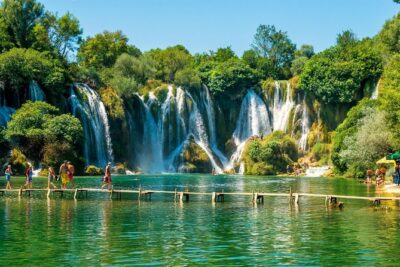
Mostar and Kravice Waterfalls Tour from Dubrovnik (Semi-Private)
Read our review →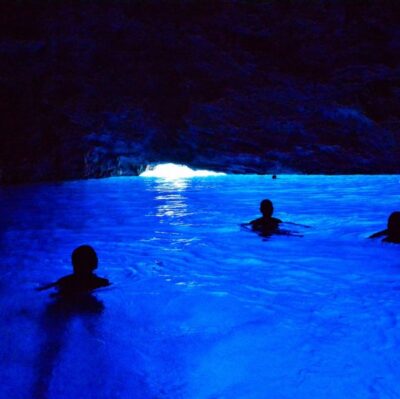
Blue & Green Caves Private Boat Tour with Drinks
Read our review →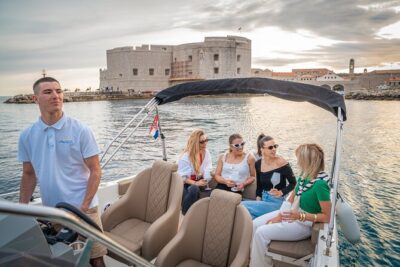
Dubrovnik Private Speedboat Tour to Elaphite Islands with Drinks
Read our review →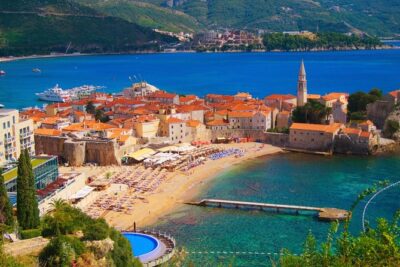
Private Tour: Montenegro Day Trip from Dubrovnik
Read our review →